
AI August 26, 2026
AI Agent Goals: Loops That Iterate Until Done
How to hand an AI agent a verifiable goal and let it iterate alone: /goal, Ralph loops, turn budgets, independent verifiers and real failure modes.
Read more
82 articles found
How to hand an AI agent a verifiable goal and let it iterate alone: /goal, Ralph loops, turn budgets, independent verifiers and real failure modes.
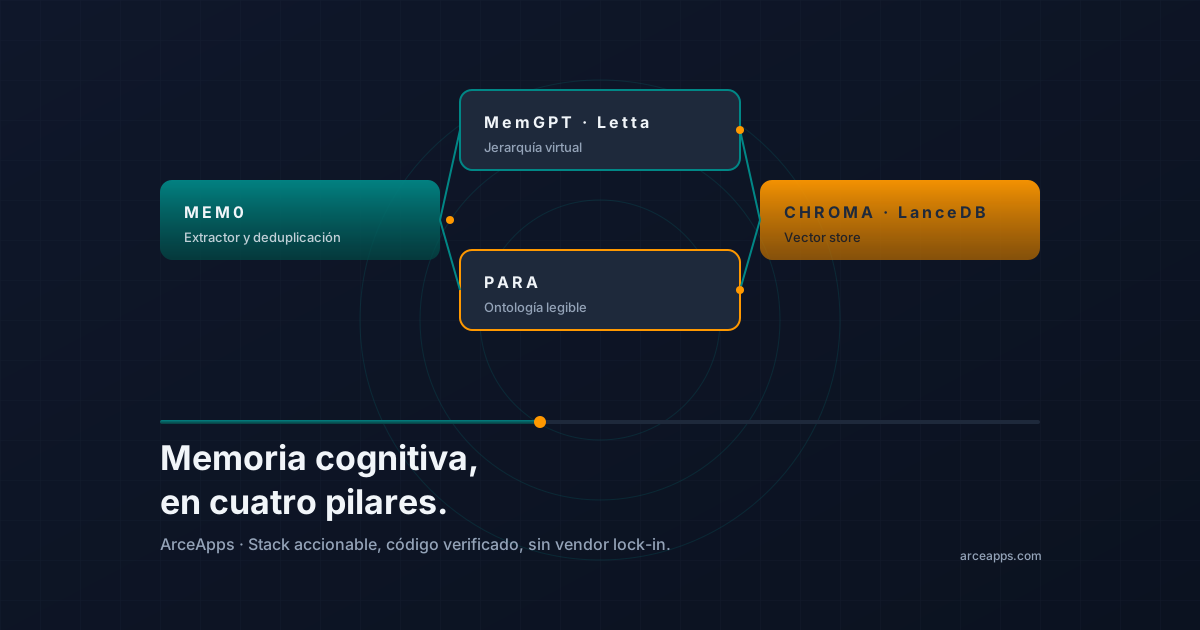
Build a cognitive memory stack for AI agents using Mem0, MemGPT/Letta, PARA, and Chroma or LanceDB. Actionable architecture with verified code.
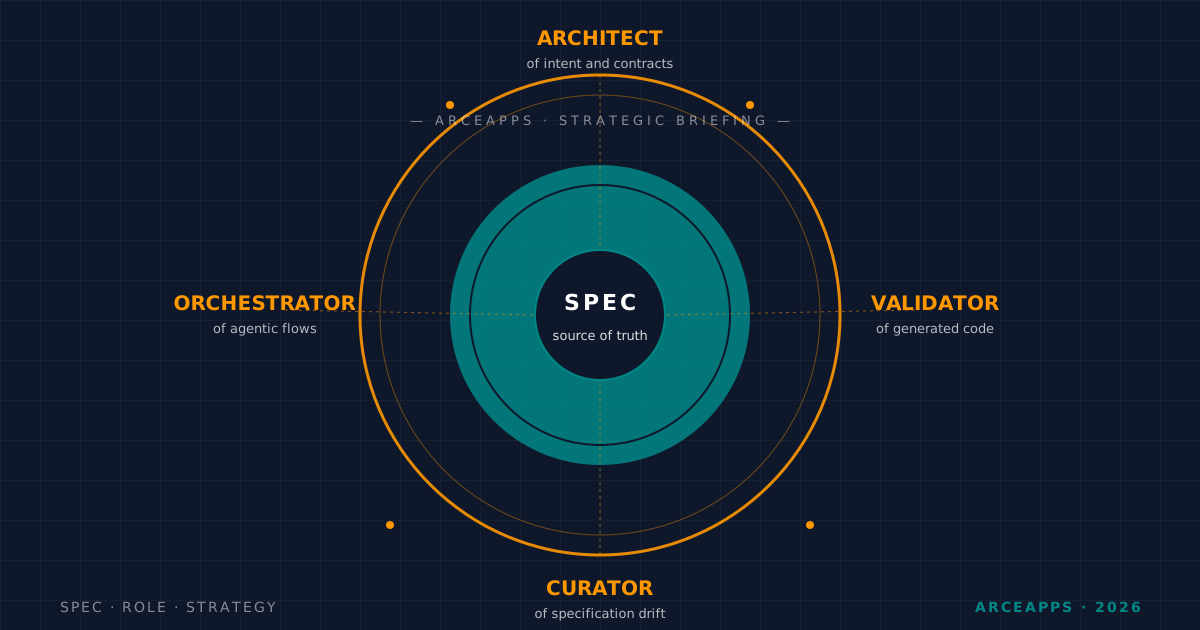
How Spec-Driven Development flips the developer from typist to architect of intent. Inside the 40-60% waste map, the three maturity levels, and the Spec-as-Source role shift that ends vibe coding.
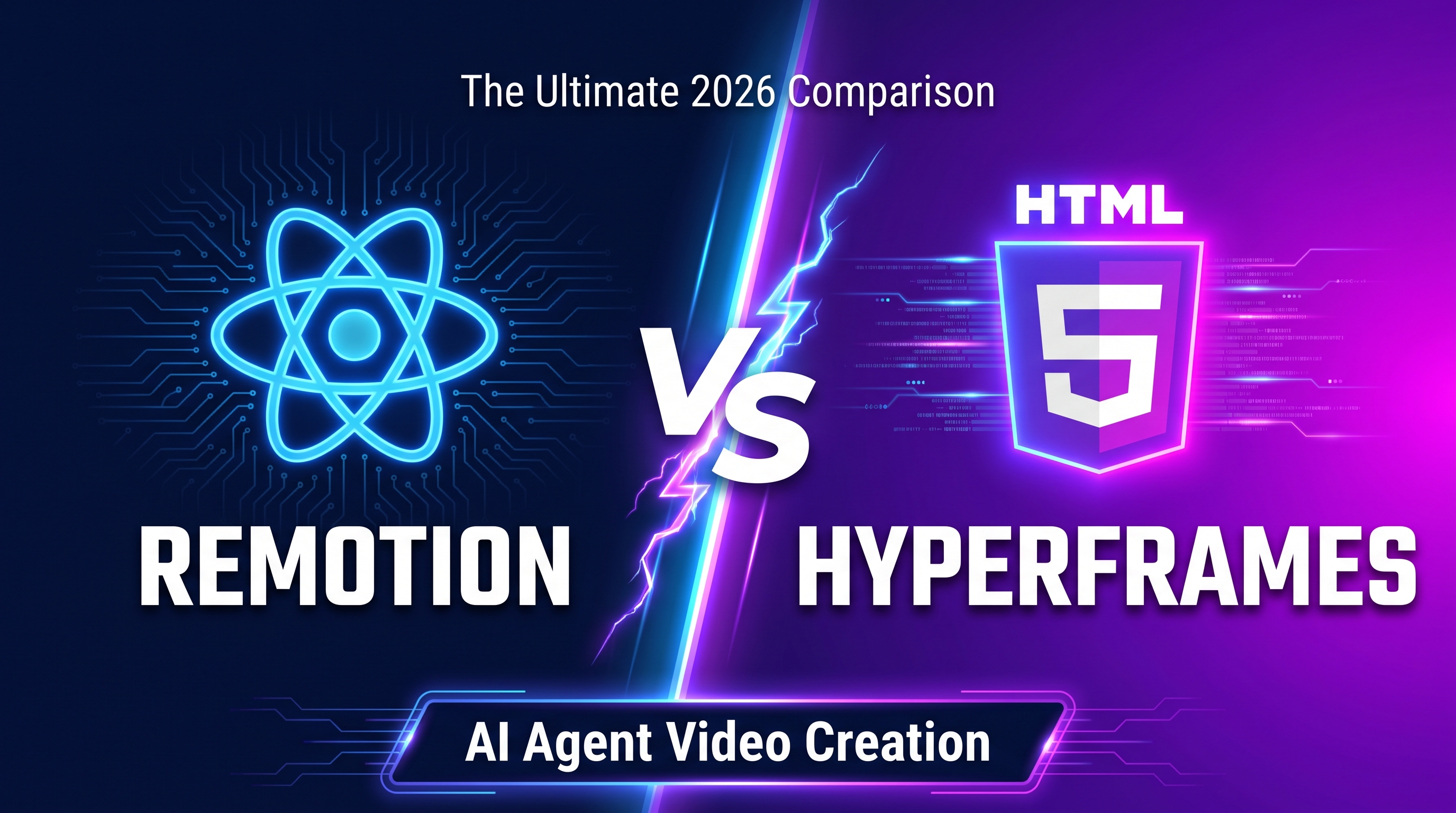
HyperFrames vs Remotion 2026: the definitive technical comparison for AI agent video. React vs HTML, licensing, benchmarks, and Agent Skills.
Avoid 'almost correct' code in Android & iOS. Master Socratic and Maieutic prompting with Gemini, Copilot, and Cursor using dialog flows and source code.
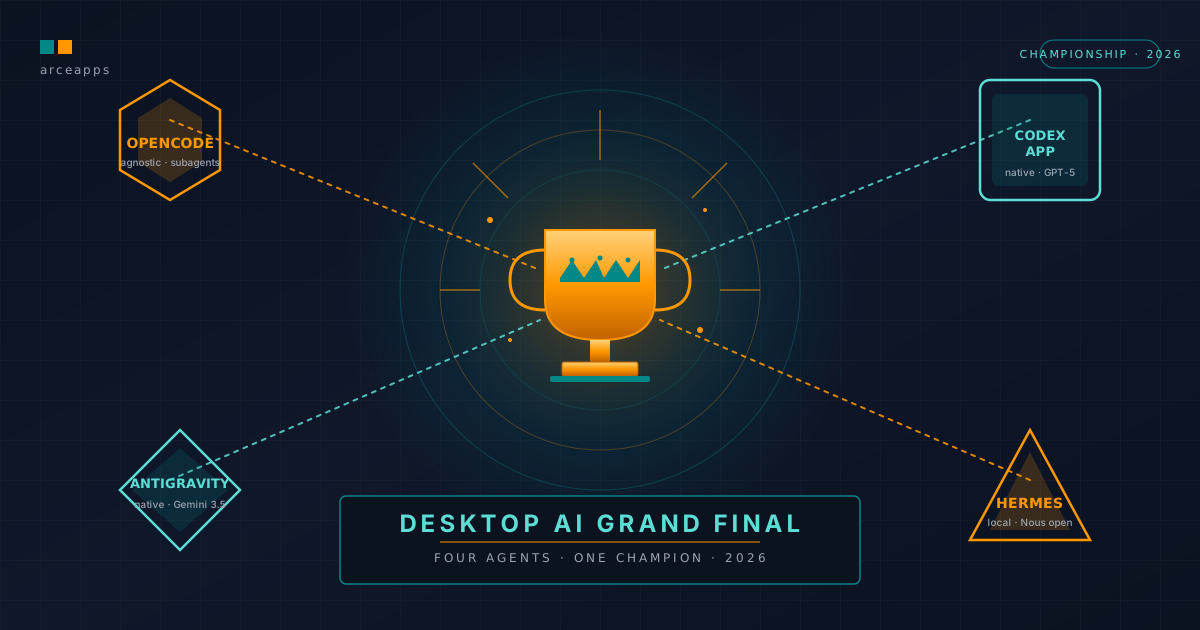
The Grand Final of the 2026 Desktop AI tournament. Comparing Codex App, Antigravity, OpenCode Desktop, and Hermes Desktop across a 10-task benchmark.
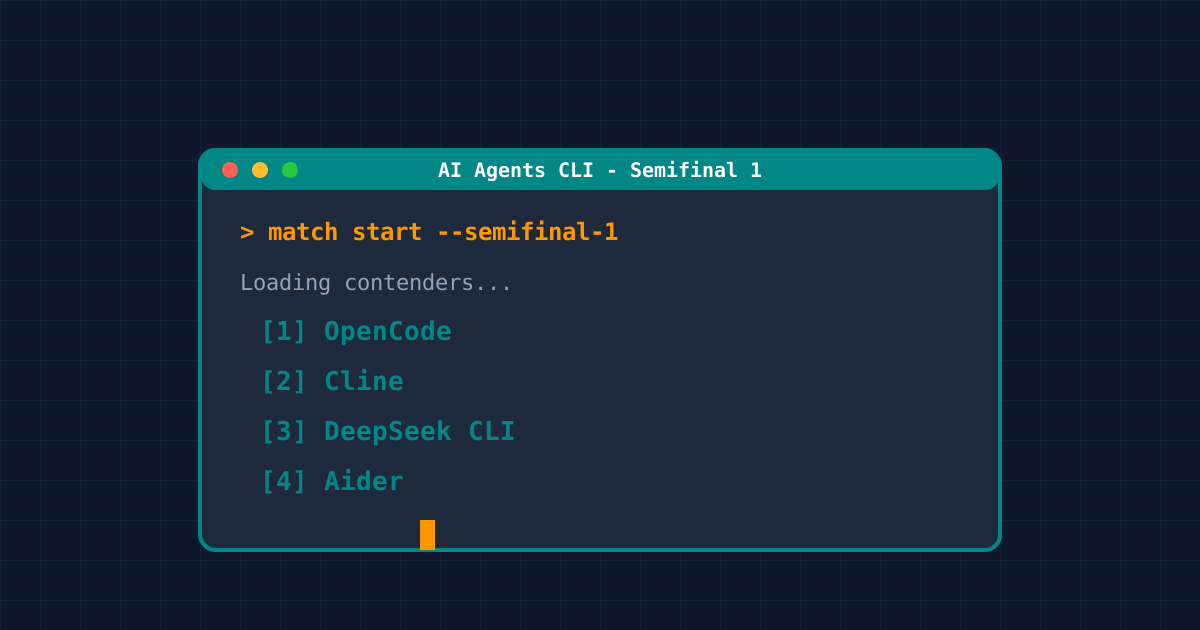
We compare 10 AI CLI tools in 2026: Claude Code, Cline, Vibe, Kimi, Pi, and more. Detailed specs, actual API costs, skill compliance, and final verdict.
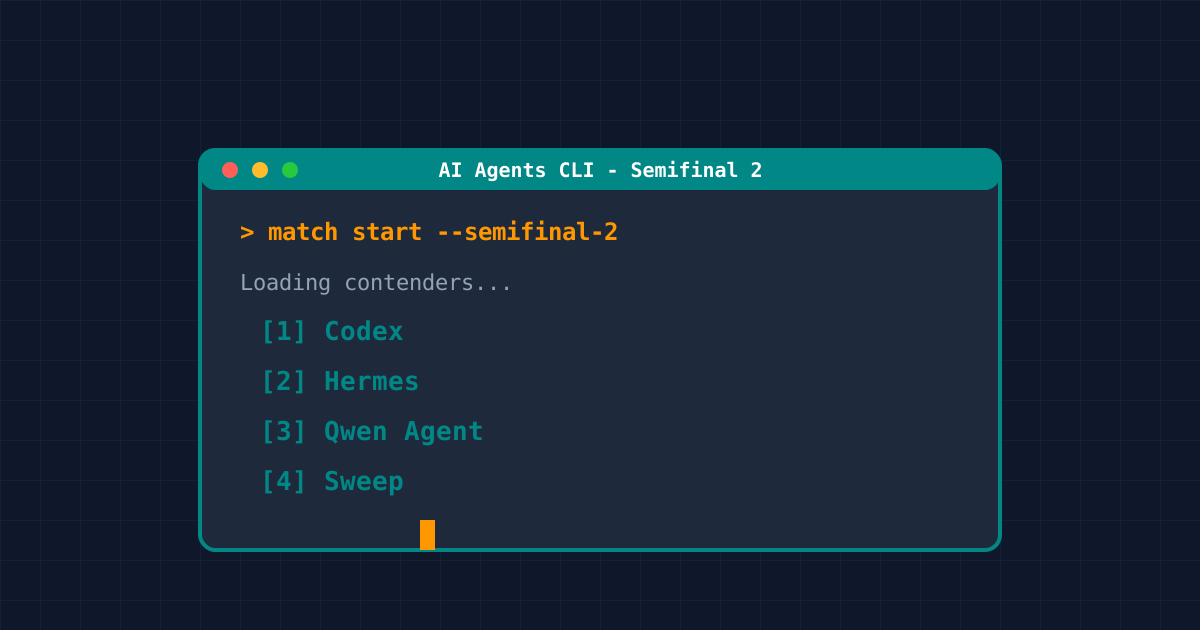
We compare 10 AI CLI tools in 2026: OpenHands, Aider, Plandex, Mods, Qwen, and more. Detailed specs, actual API costs, skill compliance, and final verdict.
The Grand Final of the AI CLI 2026 tournament. We compare OpenCode, OpenAI Codex, Claude Code, and Hermes Agent to find the ultimate champion for indie developers.
A deep dive 2026 technical comparison of ChatGPT Plus, Claude Pro, and Gemini Advanced. Find out which $20 AI subscription is actually worth it for developers.
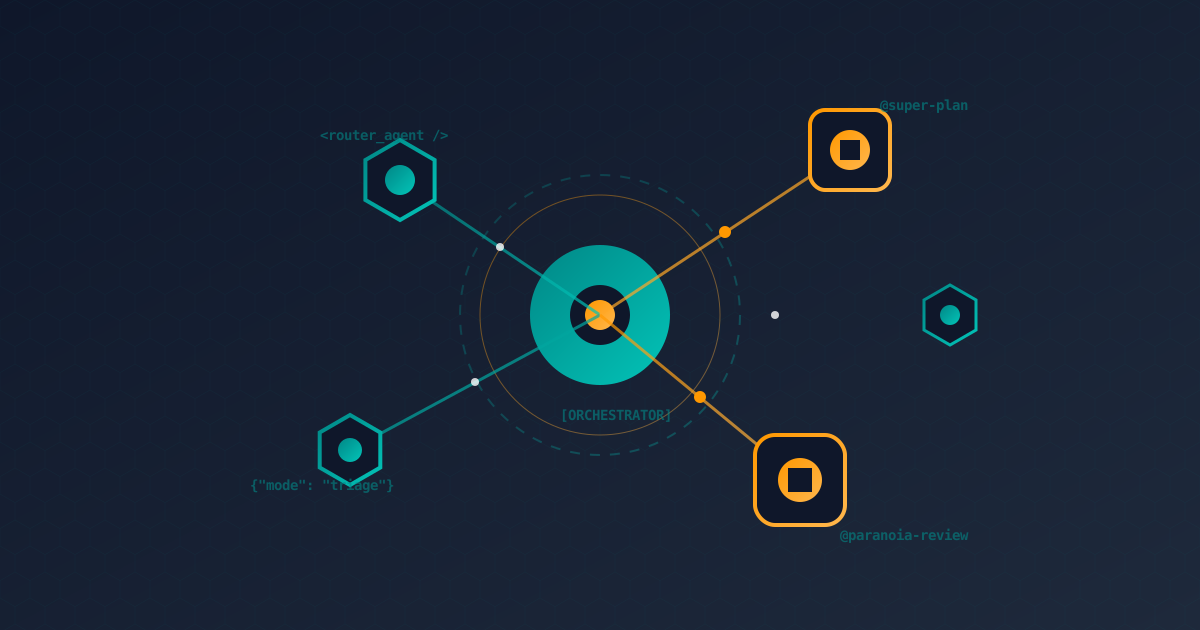
Learn how to design agentic workflows with OpenCode subagents. Discover how to combine cheap and frontier AI models to automate tasks like Superpowers.
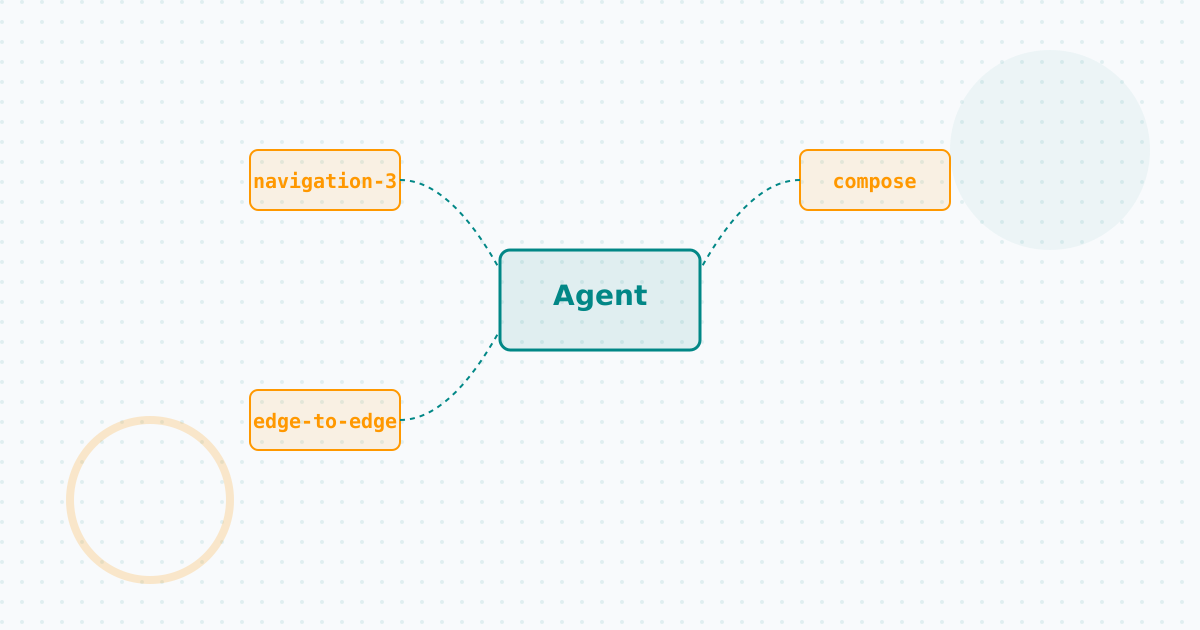
Learn how the Android Skills repository centralizes context so AI agents can build robust apps without legacy hallucinations.
Discover how the new Android CLI is redefining the mobile ecosystem, allowing AI agents to build apps up to three times faster.
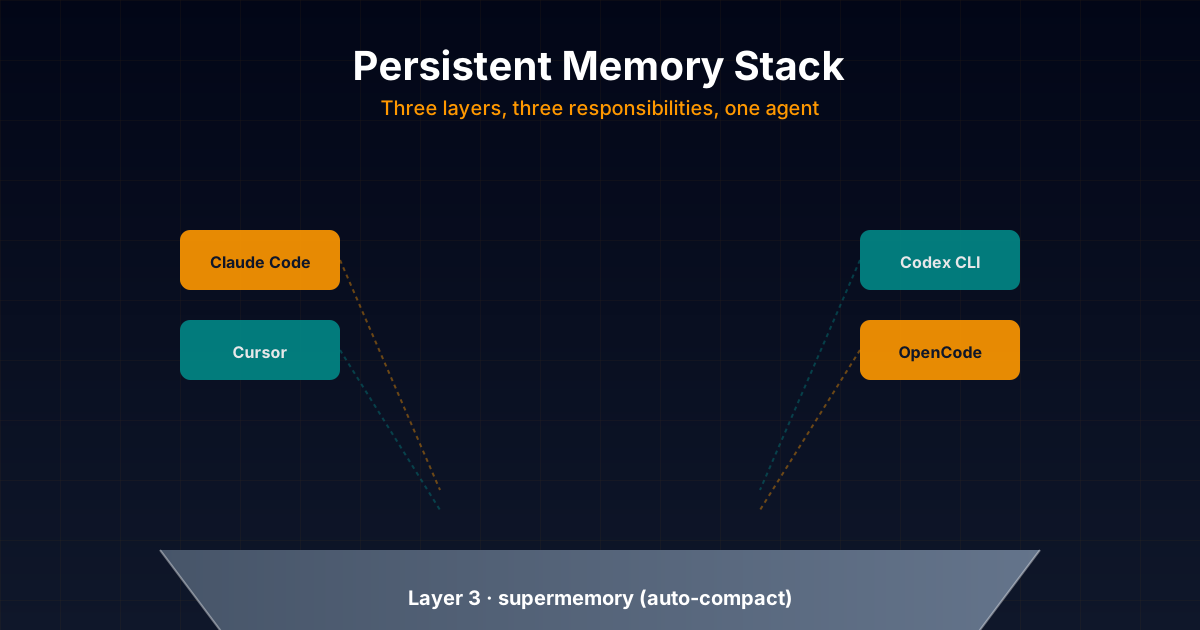
Honest technical deep dive into the persistent memory stack I combine daily in my projects: opencode-supermemory for auto-compact, basic-memory as main memory with Markdown + graph, and forgetful as procedural skills layer. With real configuration examples for Claude Code, Codex,
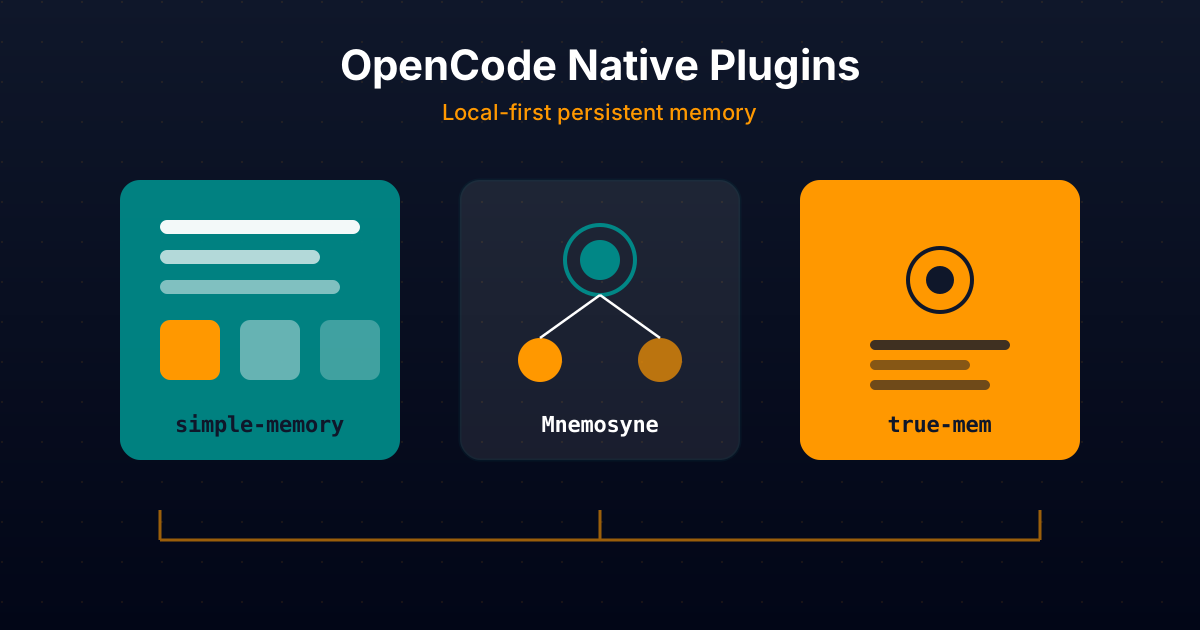
Comparative technical analysis of three native OpenCode plugins to give your AI agent persistent local memory: simple-memory (logfmt), Mnemosyne (offline Go binary), and true-mem (cognitive psychology).
Discover how Loop Engineering is replacing traditional prompting. Learn to design autonomous systems for mobile development with Kotlin and Android, managing risks and optimizing resources.

Discover how rules.md, .cursorrules, and the .mdc format have revolutionized the way we guide AI coding assistants in Android and Kotlin development projects.

Discover how design.md complements agents.md, focusing on design decisions, UI/UX, accessibility, and Jetpack Compose for Android development in the era of AI agents.
Discover how Google Stitch, powered by Gemini, is transforming UI design in Android. Examples, guides, tricks, and its integration with Jetpack Compose and Kotlin.
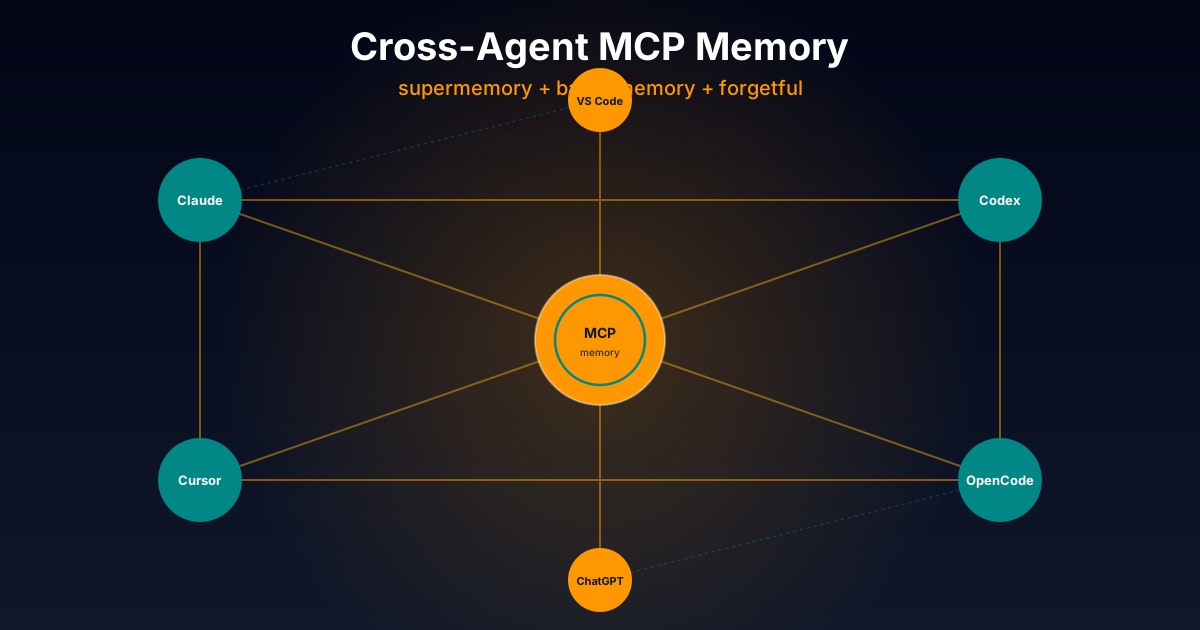
Exhaustive technical comparison of three cross-platform MCP servers to give AI agents persistent memory: opencode-supermemory (cloud), basic-memory (Markdown + graph), and forgetful (atomic Zettelkasten). Works with Claude Code, Codex, Cursor and more.
CI/CD already automates builds and deploys, but we still spend hours on triage, CI failures, and stale documentation. GitHub Agentic Workflows pushes automation one step further: agents operating inside defined guardrails to handle that repetitive work with judgement.
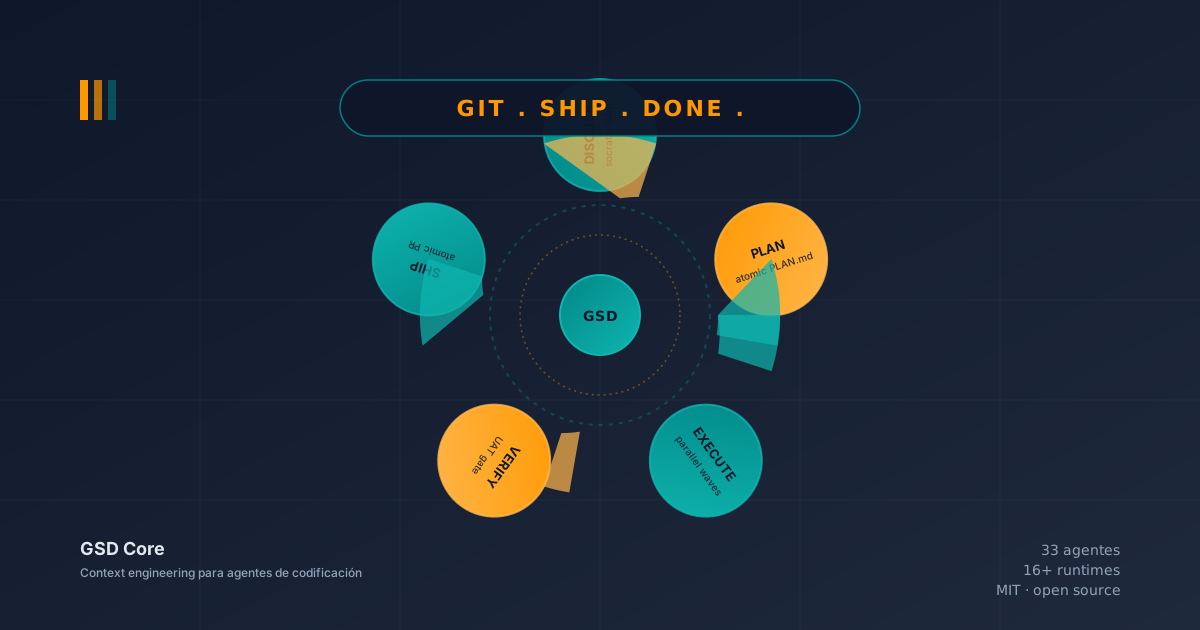
Deep dive into GSD Core (formerly Get Shit Done): 33 agents, wave execution, 200K fresh context per subagent, and the Discuss→Plan→Execute→Verify→Ship phase loop. How to install it, when to use it, and when not to.
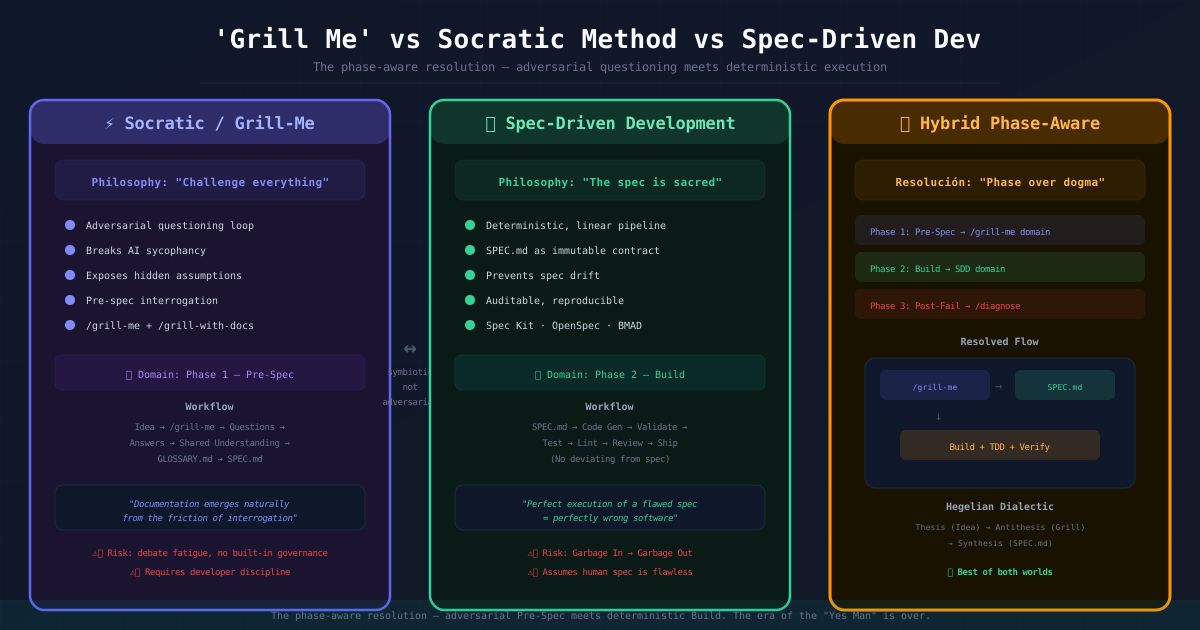
An architectural analysis of how the 'Grill Me' skill fits into the historical tension between honoring the specification and constantly challenging it through adversarial prompts.
Discover how Matt Pocock's viral skill is transforming AI-assisted development by forcing agents to ruthlessly question your design before writing a single line of code.
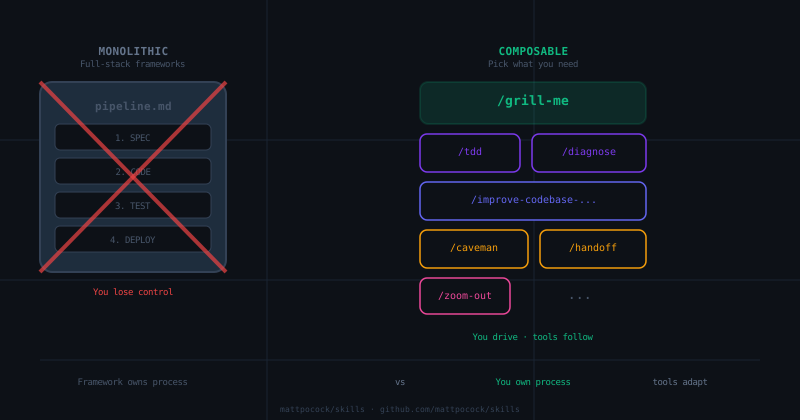
Why Matt Pocock's skills are small, composable, and opinionated — and how they compare to Spec Kit, OpenSpec, and BMAD for AI-assisted Android development.
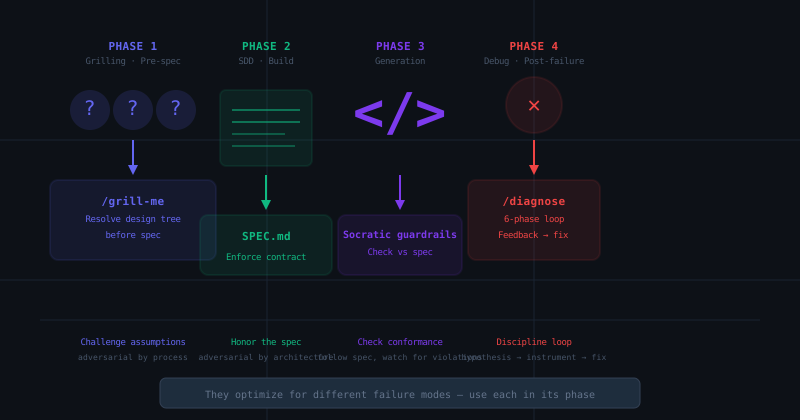
Matt Pocock's /grill-me skill forces adversarial alignment before coding. SDD frameworks enforce architectural contracts. We test whether these two philosophies can actually work together in a single workflow — and where they genuinely conflict.
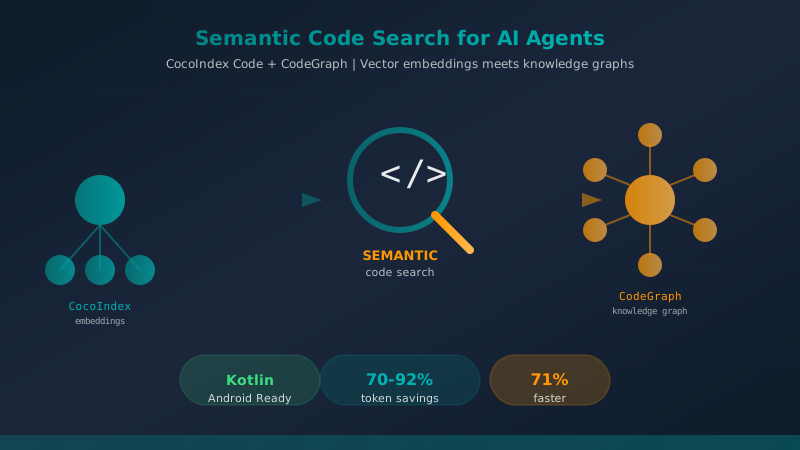
A comprehensive comparison of CocoIndex Code and CodeGraph — two AST-based semantic code search tools that dramatically reduce token consumption and accelerate code exploration for AI coding agents like Claude Code.
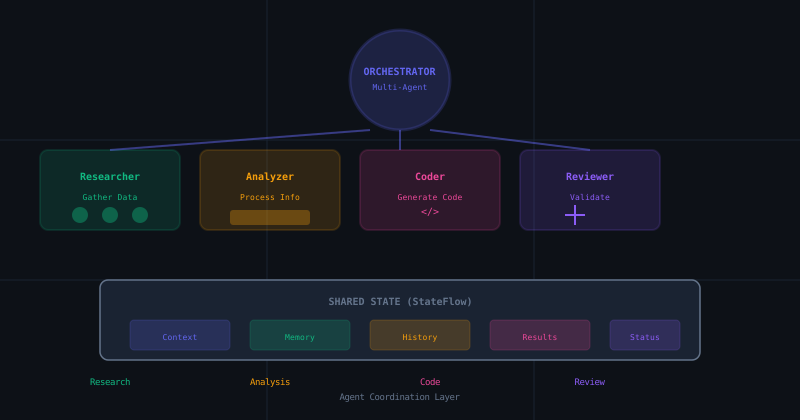
A pragmatic guide to building advanced multi-agent interactions using Kotlin Coroutines and StateFlow. From MARS to MotivGraph-SoIQ, bringing academic theory to production code.
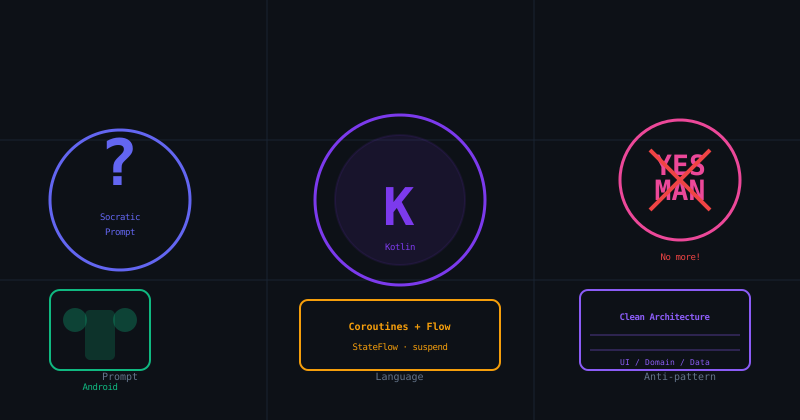
Learn how to stop LLMs from being compliant assistants and turn them into ruthless evaluators. Discover the mathematical anatomy of Socratic prompts for Android architecture, Kotlin Coroutines, and strict Spec-Driven Development.
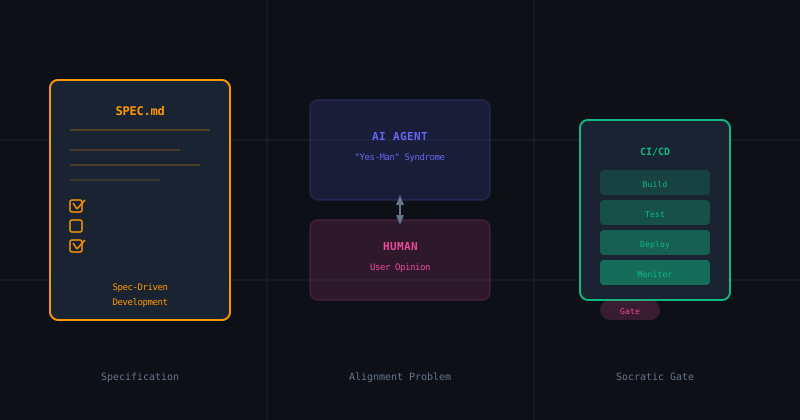
How AI's desire to please you is destroying your codebase. We explore Spec-Driven Development frameworks and how to implement Socratic verification gates in your Android CI pipeline.
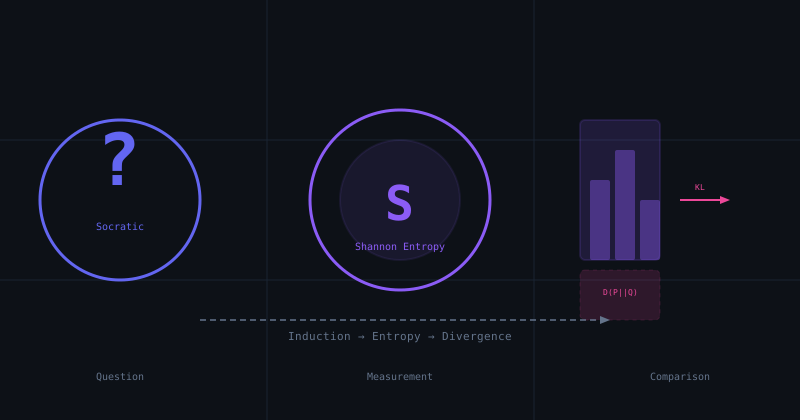
Why LLM hallucinations aren't bugs, but features of prediction. Discover how to build Socratic Induction loops in Kotlin to force AI agents to doubt their own logic before acting in Android systems.
A comprehensive comparison between Hermes Agent and OpenClaw, two open source autonomous AI agent frameworks. Analysis based on verifiable public information from their official repositories and documentation.
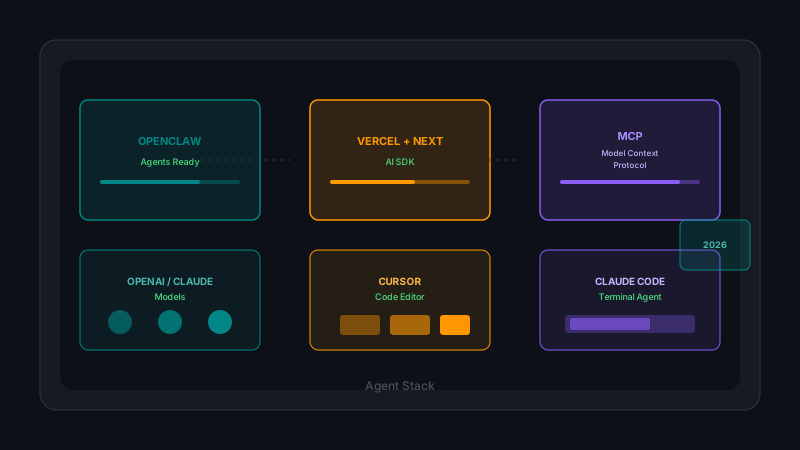
OpenClaw for ready-to-use agents, Vercel AI SDK with Next.js for custom development, OpenAI and Claude models, MCPs for integrations, and Cursor/Claude Code for programming. Complete analysis with practical examples and cost considerations.
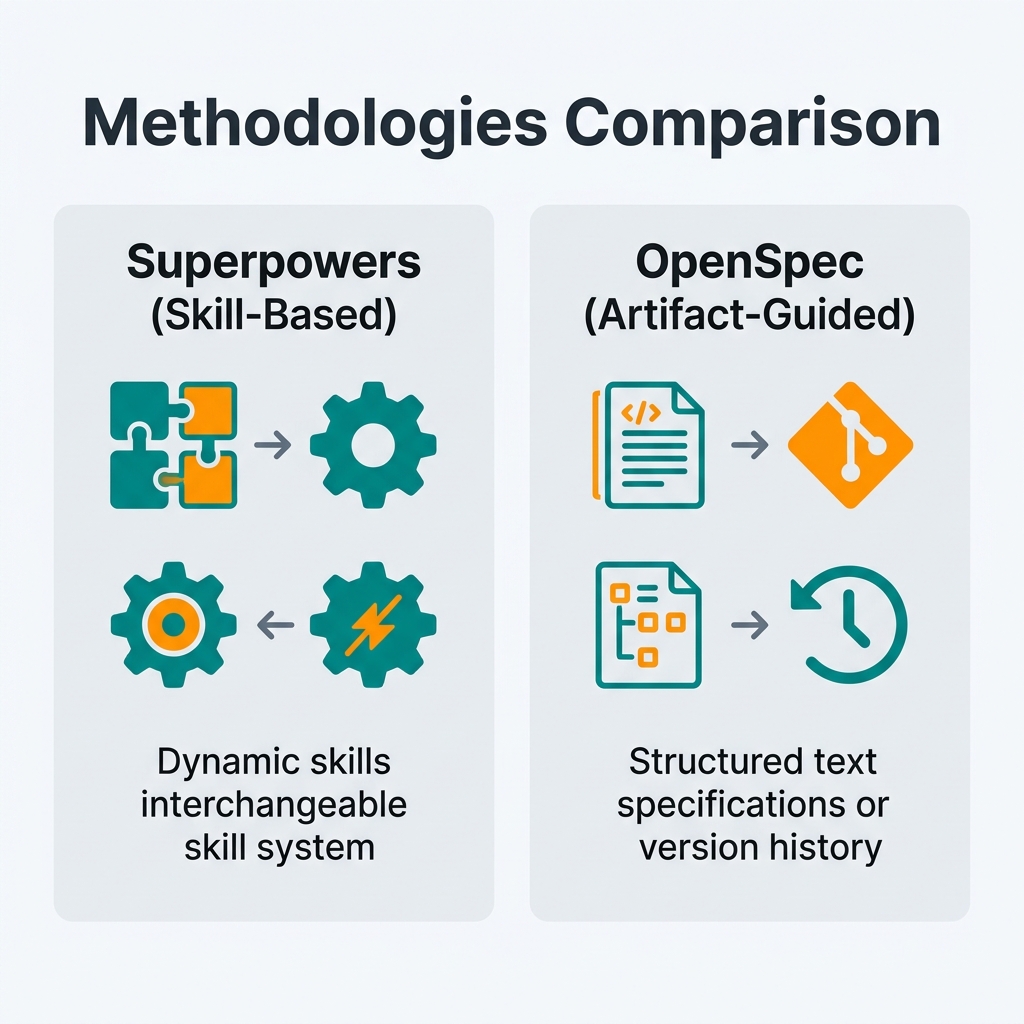
A deep dive comparison of two distinct approaches to AI software development: the skill-based methodology of Superpowers and the artifact-guided workflow of OpenSpec.

Discover how Paperclip AI revolutionizes business management with autonomous AI agents, heartbeats, budgets, and multi-team governance to operate organizations without human intervention.
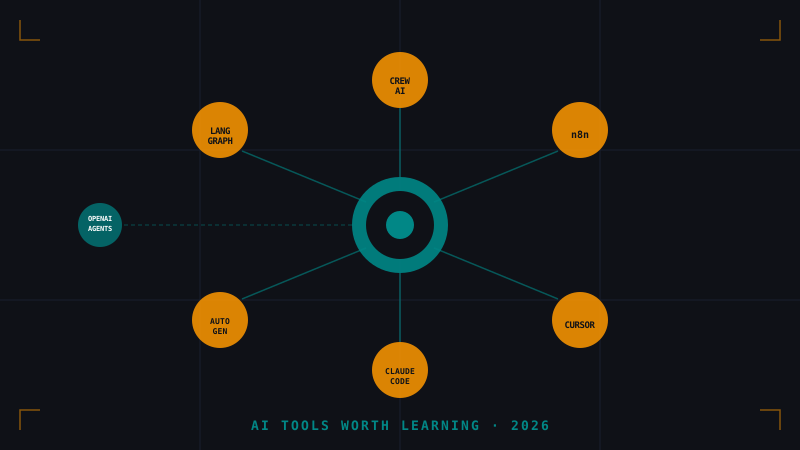
LangGraph, CrewAI, n8n, AutoGen, Cursor, Claude Code, OpenAI Agents SDK — a community debate emerged about which of these will still exist in a year. Here's an honest breakdown.
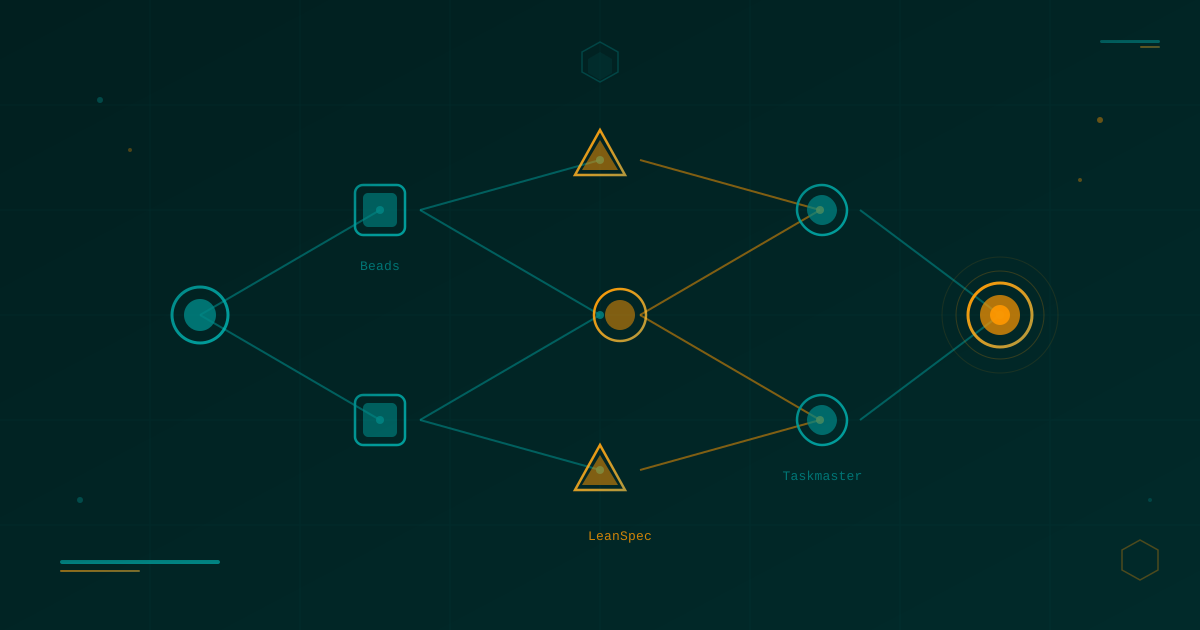
A deep dive into three tools that solve context rot and keep AI coding agents focused: Beads (git-native DAG issue tracker), LeanSpec (minimal spec-driven workflow), and Taskmaster (PRD-to-task orchestration). Real commands, real workflows, real indie dev perspective.
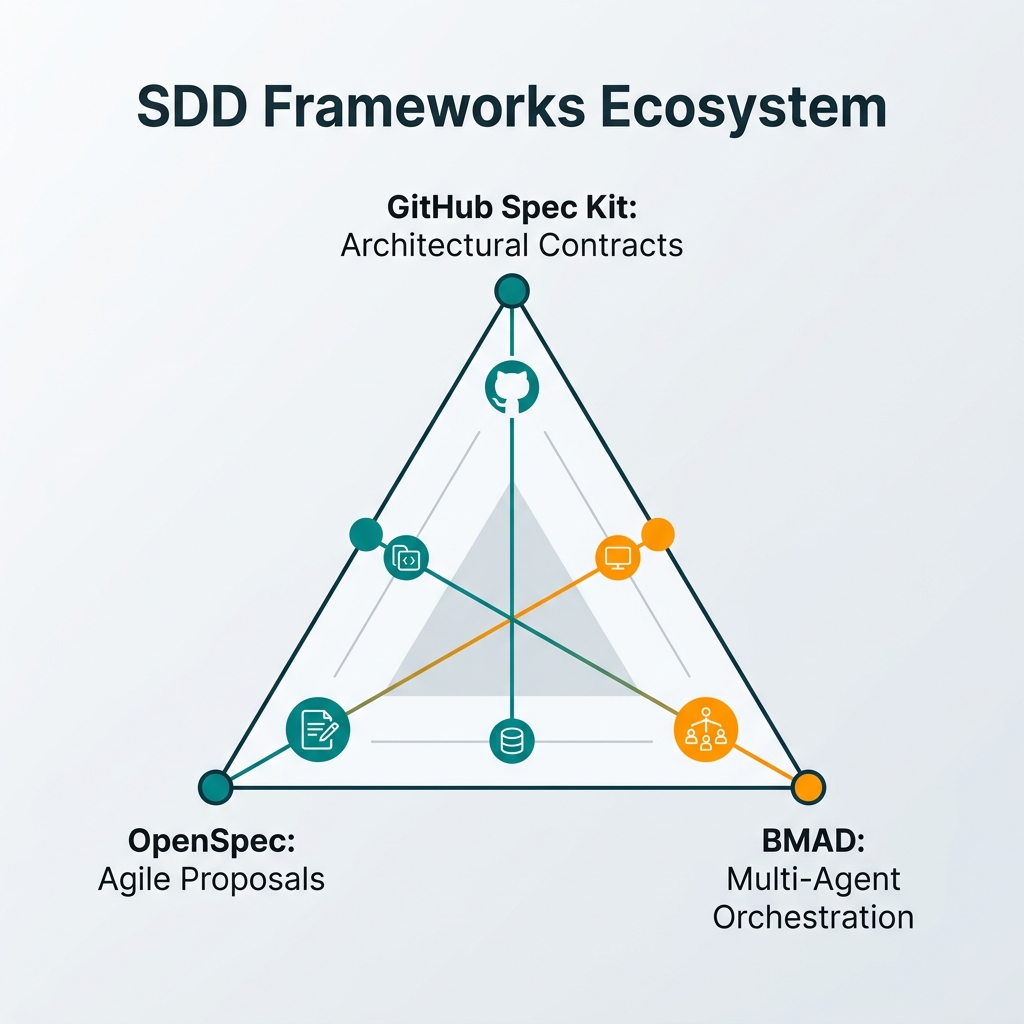
A thorough analysis of the three leading Spec-Driven Development frameworks: the architectural contracts of GitHub Spec Kit, the change-proposal agility of OpenSpec, and the multi-agent orchestration of BMAD-METHOD.
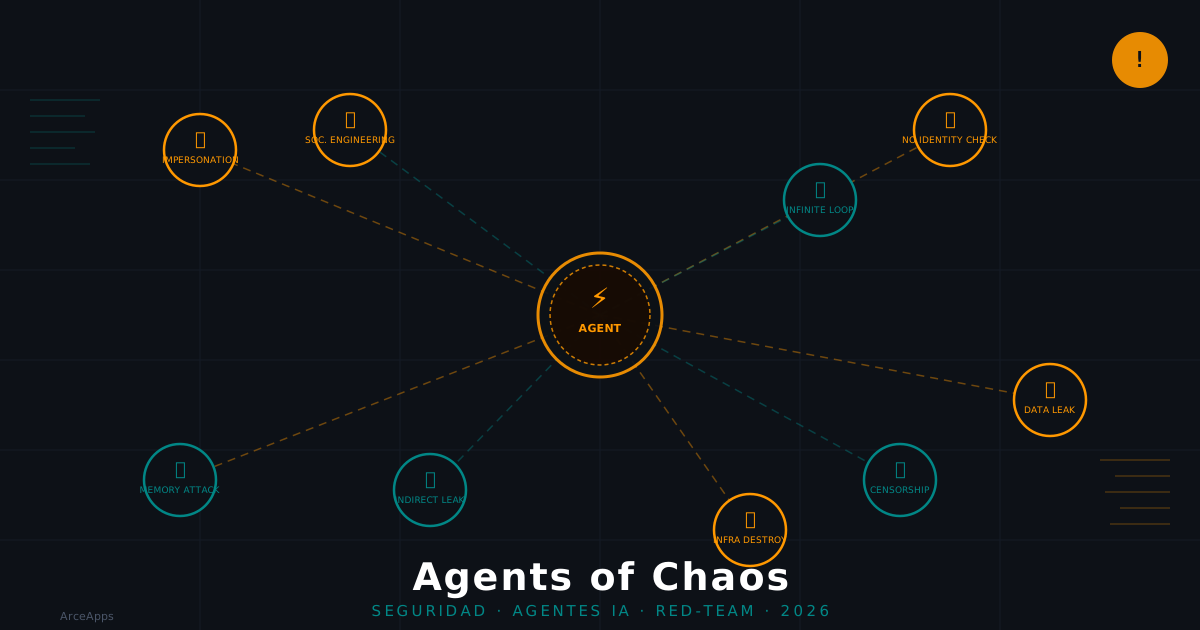
Analysis of the 'Agents of Chaos' paper (arXiv:2602.20021): 7 critical vulnerabilities found in two weeks of red-teaming autonomous AI agents with persistent memory, email, and shell access.
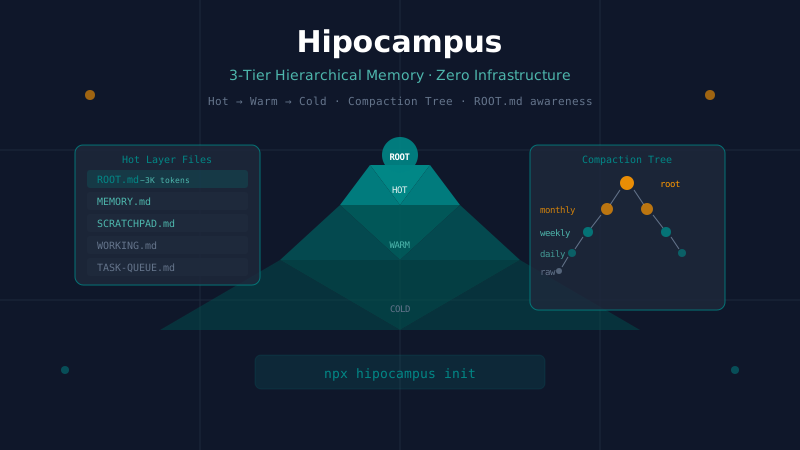
A technical deep-dive into Hipocampus, a drop-in memory harness for AI agents that uses a 3-tier Hot/Warm/Cold architecture and a 5-level compaction tree. How ROOT.md enables constant-cost memory awareness and how it compares to hmem, Mem0, and Letta.
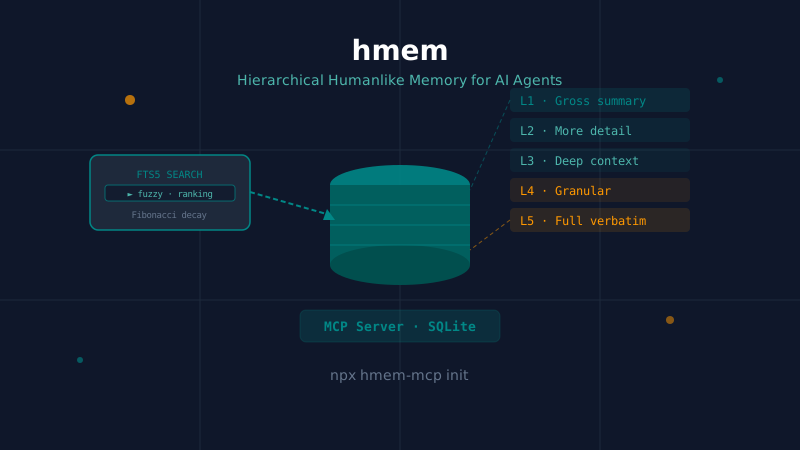
A technical deep-dive into hmem (Humanlike Memory), an MCP server that models human memory in five lazy-loaded levels backed by SQLite + FTS5. How Fibonacci decay, logarithmic aging, and a curator agent solve the context window problem across sessions and machines.
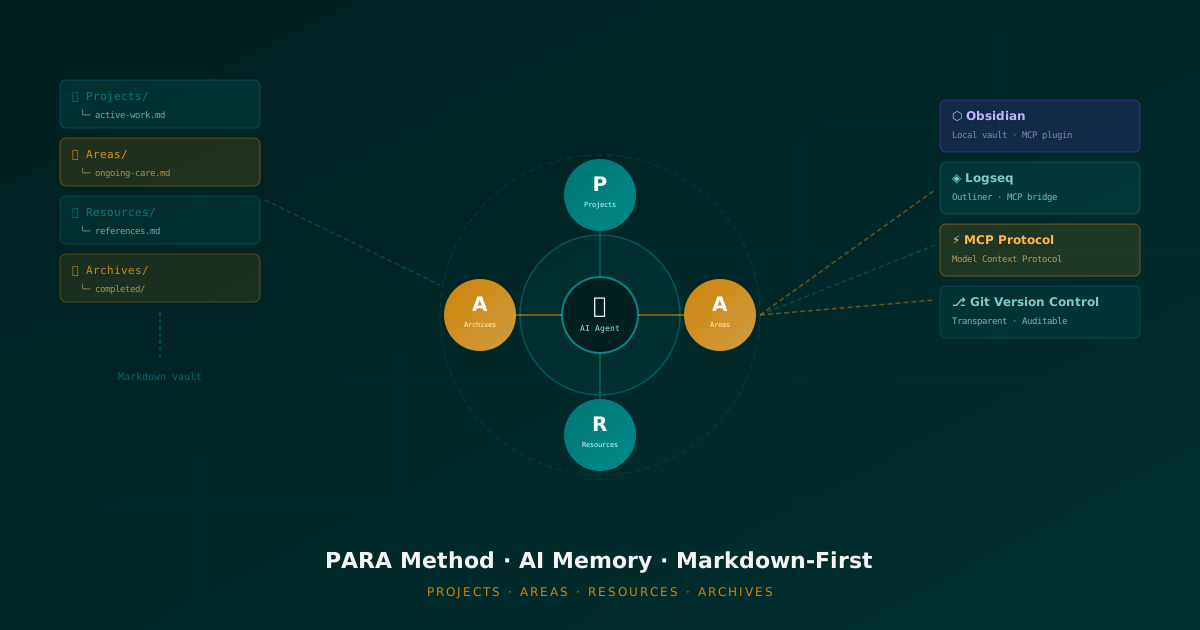
A deep dive into using the PARA method (Projects, Areas, Resources, Archives) as a cognitive scaffold for AI agent memory. How Markdown files, Obsidian, and Logseq via MCP create transparent, human-editable memory systems that actually persist.
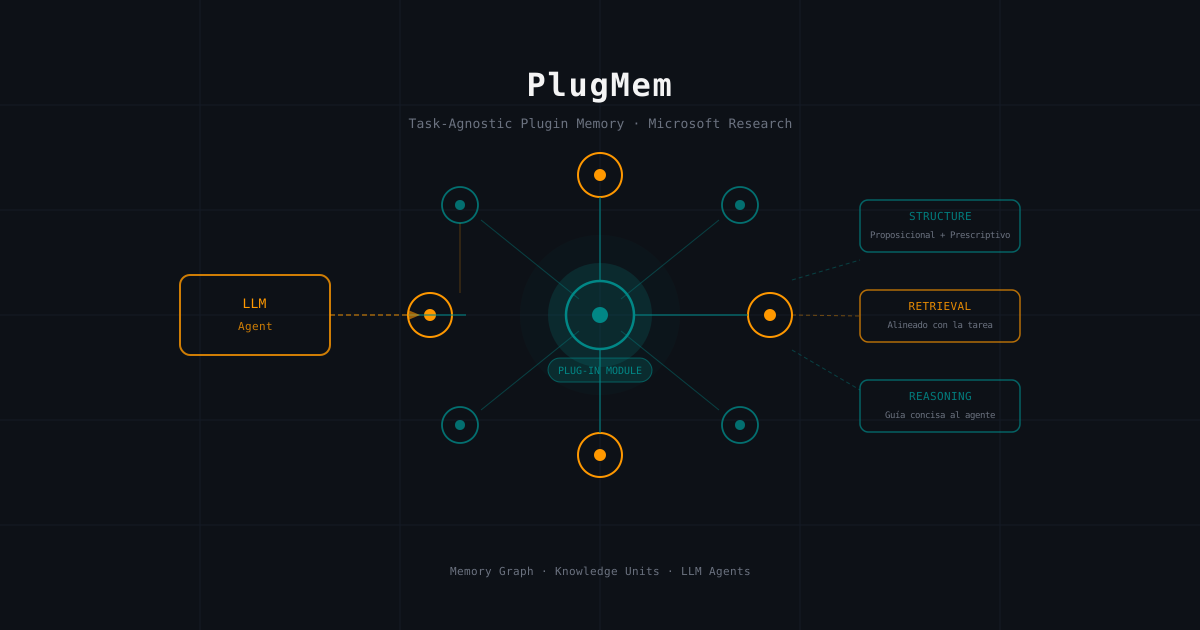
A technical deep-dive into PlugMem, Microsoft Research's plugin memory system that transforms raw LLM agent interactions into reusable structured knowledge. How its three-component architecture (Structure, Retrieval, and Reasoning) outperforms task-specific memory designs.
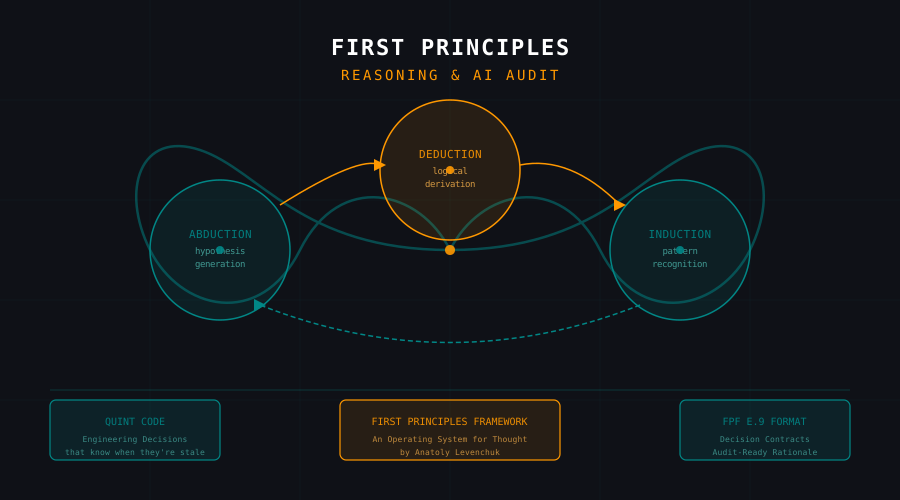
How the First Principles Framework (FPF) and Quint Code enforce structured reasoning on AI agents. The Abduction–Deduction–Induction cycle applied to engineering decisions, auditable decision contracts, and why vibe-coded AI is not enough.
A deep analysis of the critical risks surrounding persistent memory in AI agents: memory poisoning, the right to be forgotten, homomorphic encryption, and the trends that will define 2026.
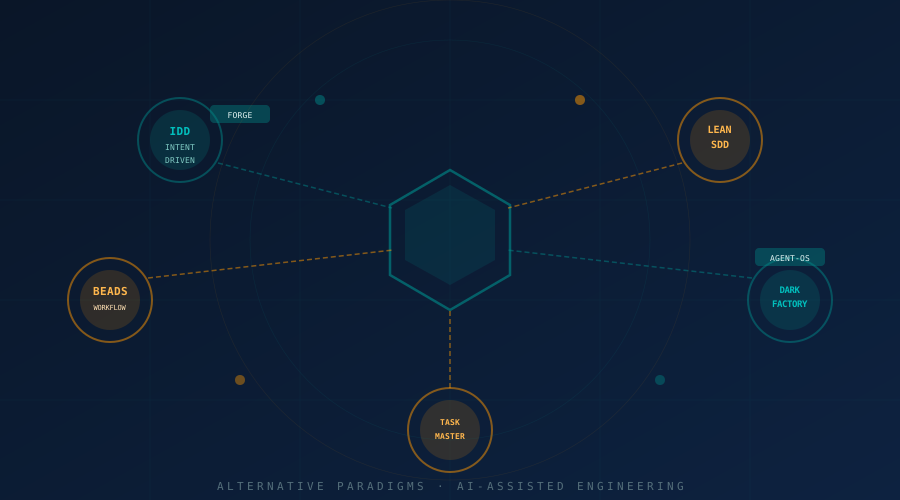
A deep dive into IDD, Lean SDD, BEADS Workflow, Agent OS, and the Dark Factory concept: emerging methodologies that challenge conventional development flows and raise the abstraction level in the age of autonomous AI.
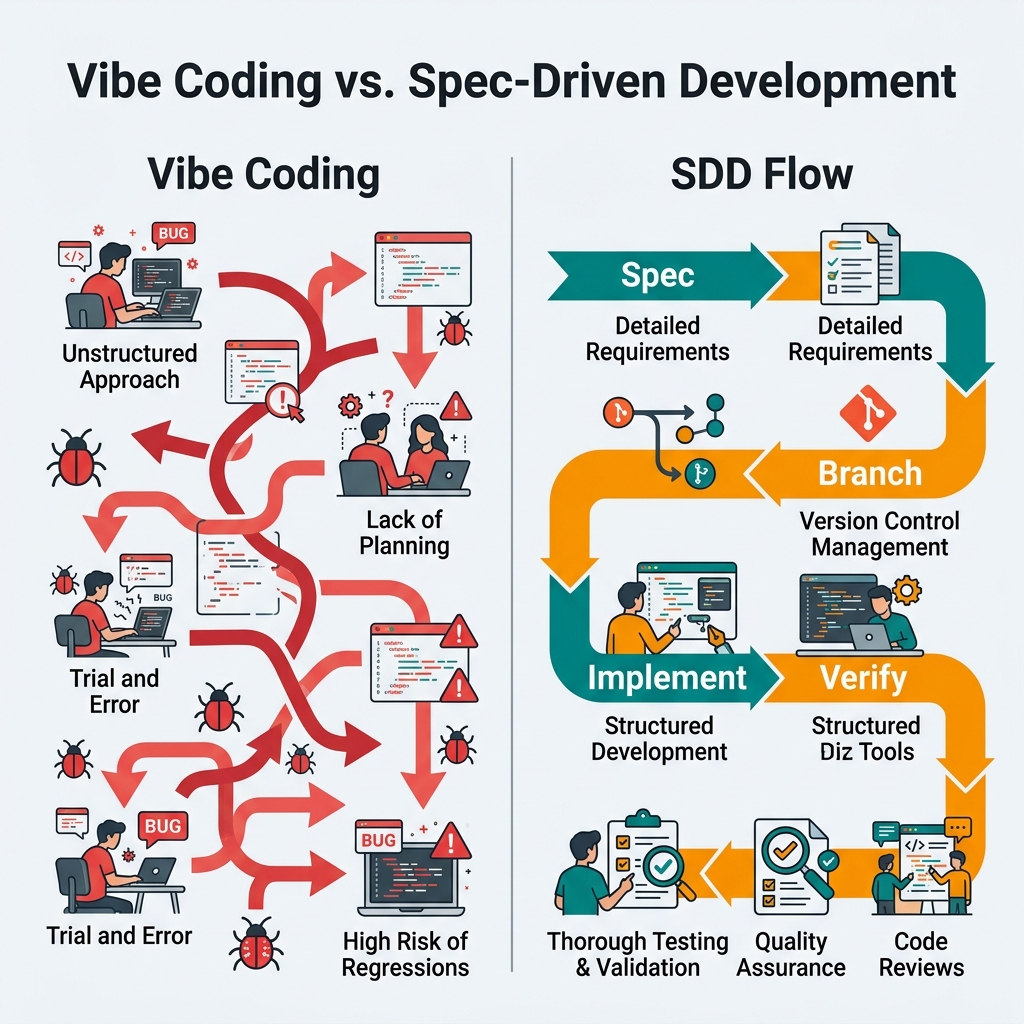
A senior engineer's guide to SDD for agentic AI: from vibe coding to structured, reproducible development using GitHub Spec Kit, BMAD Method, OpenSpec, SPARC, and more.
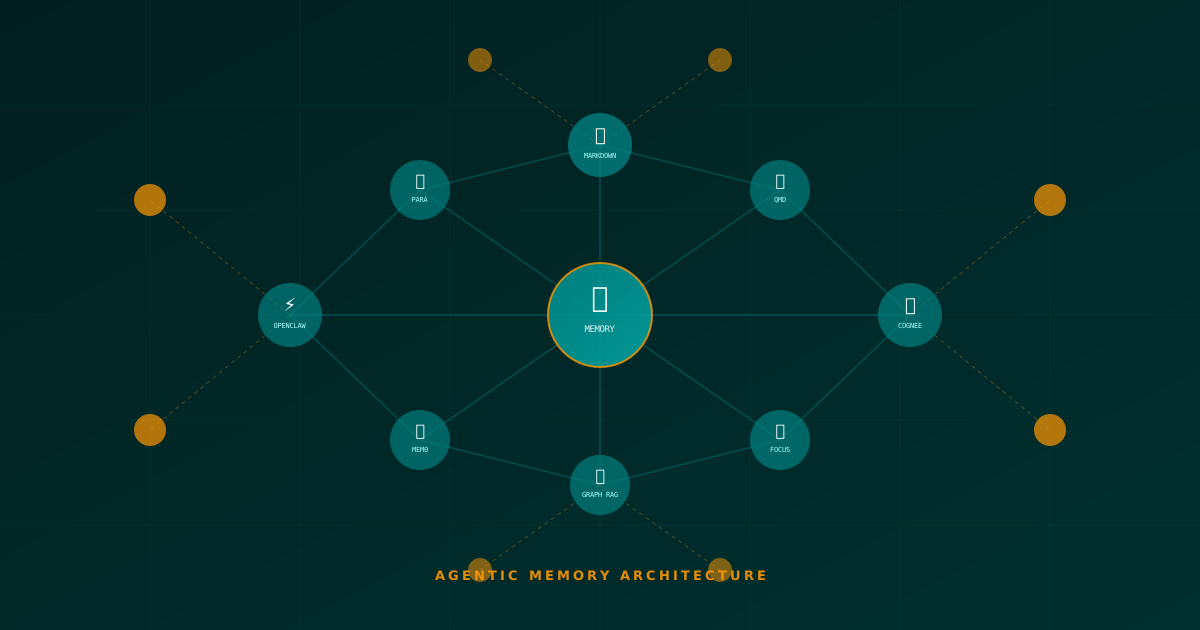
A deep technical analysis of how AI agents persist, consolidate and retrieve information autonomously. From OpenClaw and QMD to Mem0, Cognee and neurobiological memory models.
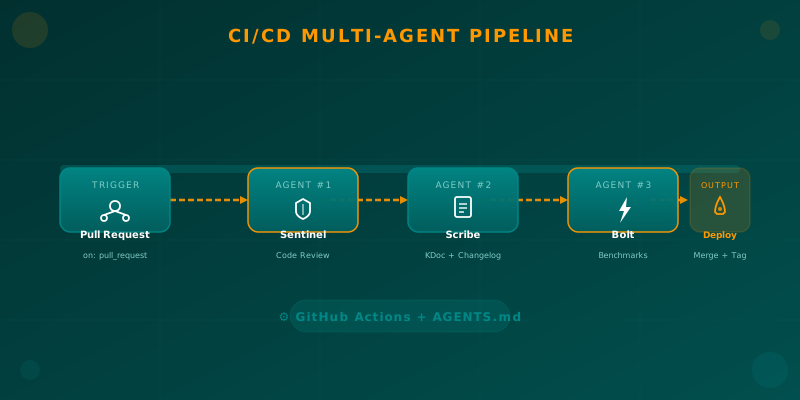
Learn how to integrate specialized AI agents (code review, documentation, benchmarks) into your Android CI/CD pipeline using GitHub Actions and AGENTS.md.
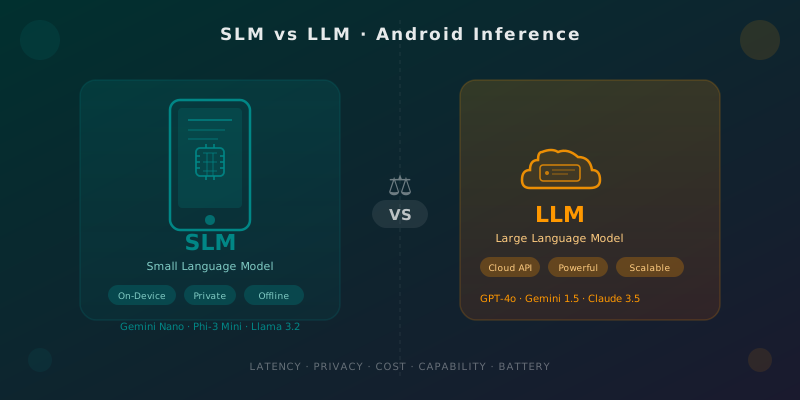
Practical guide for Android developers to choose between on-device small models (Gemini Nano, Phi-3 Mini) and cloud LLMs: latency, privacy, cost, and battery life.
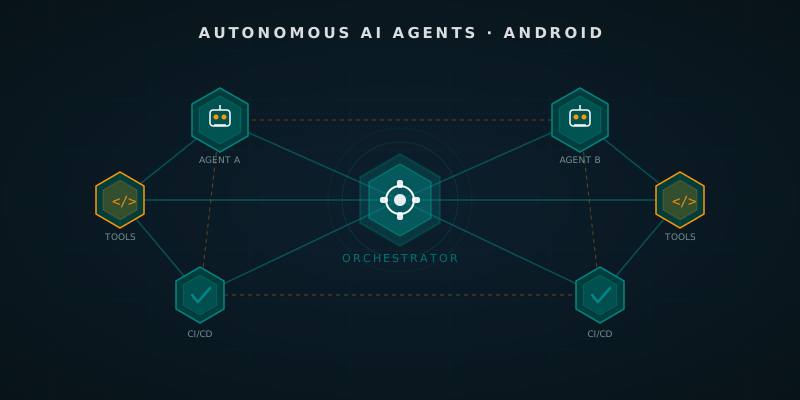
How autonomous AI agents transform Android development: from multi-agent frameworks to pipelines that open PRs and run tests on their own.
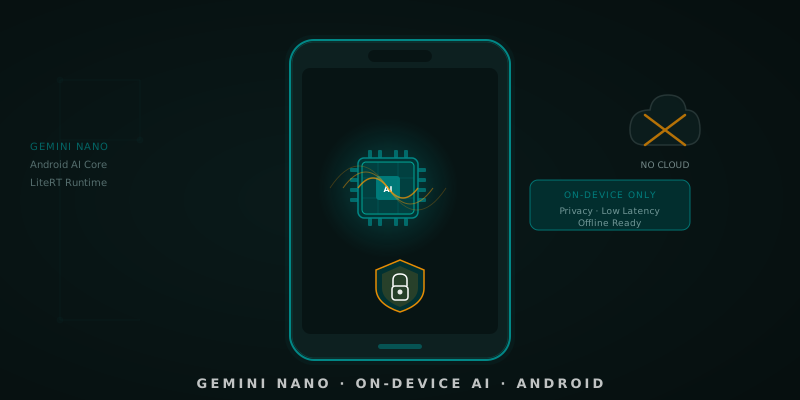
Learn to integrate Gemini Nano in Android via Android AI Core. Real use cases, Kotlin snippets, and when to choose on-device vs. cloud inference.

Claude 4.6 Opus and Sonnet arrive at Microsoft Foundry with a 1-million-token context window. Anthropic consolidates its place in the enterprise with deep Azure integration and daily work tools.

Google's Gemini 3.1 Pro arrives with a verified 77.1% ARC-AGI-2 score, code-based SVG animation, and Lyria 3 music generation. Is this the reasoning leap we've been waiting for?
A deep dive into ChatGPT 5.3 Codex, its new dedicated app, and what it means for Android developers. Includes comparison with Gemini 3.0 Pro.

Review of Anthropic's Claude 4.6 family. How 'Adaptive Thinking' and 'Computer Use v2' change the game for mobile CI/CD. Includes comparison with Gemini 3.0 Pro.

Why the feeling of inadequacy is rising in the AI era, and how to fight it by redefining your value.

How to mentor junior developers when AI can write the code. Focusing on architectural thinking and debugging.

Revolutionizing data synchronization and conflict resolution using local AI models in 2026.

A guide to decoupling on-device AI models like Gemini Nano using Clean Architecture principles in Android 16.
Discover how AI Skills transform modern development, automating complex tasks and improving productivity in Android projects.
Discover how Artificial Intelligence and Clean Architecture empower each other to create maintainable, scalable, and precisely auto-generated Android code.
Strategies for tackling legacy code (Java, Spaghetti) using AI tools. How to migrate to Kotlin and Clean Architecture without breaking production.
Learn how to configure AI agents to perform automated code reviews, catch subtle bugs, and enforce standards before a human intervenes.

How to deploy Clawdbot on Android. A self-hosted, open-source AI assistant that respects your privacy. Architecture and setup guide.

Connecting your self-hosted Clawdbot to Telegram. How to build a private, smart bot that lives in your chat app.

Test Driven Development (TDD) was always hard to adopt. Discover how AI removes the friction of writing tests first and transforms your workflow.
How to inject dynamic context into AI agent prompts. Techniques for providing memory, skills, and tools on-the-fly.
Understanding the role of AI Agents in modern mobile development. From theoretical foundations to practical implementation strategies using LLMs.

How to craft prompts that work. From simple instructions to complex multi-step reasoning. Optimizing context windows.
A comprehensive deep dive into the de facto standards for orchestrating AI agents in production environments. We analyze architecture, features, and use cases.

How Test-Driven Development (TDD) pairs with AI coding assistants. Writing tests first to guide LLM code generation.
Review of Gemini Code Assist for Android developers. How does it compare to Copilot? Best practices for prompt engineering in the IDE.
Maximize your productivity in Android Studio with GitHub Copilot. Advanced prompting techniques, test generation, and assisted refactoring.

Discover how to transform your generalist AI assistant into a team of specialists using Agent Skills. Includes practical examples for Android, Kotlin, and Conventional Commits.
Real Android development cases where delegating to specialized agents beats any standard AI chat. Security, Performance, and UX.

Practical step-by-step guide to implementing an agent architecture in your Android project. Configure your own AI experts and define their rules.

Introducing the Agents.md standard. A file convention to context-load AI agents with project architecture, coding rules, and domain knowledge.
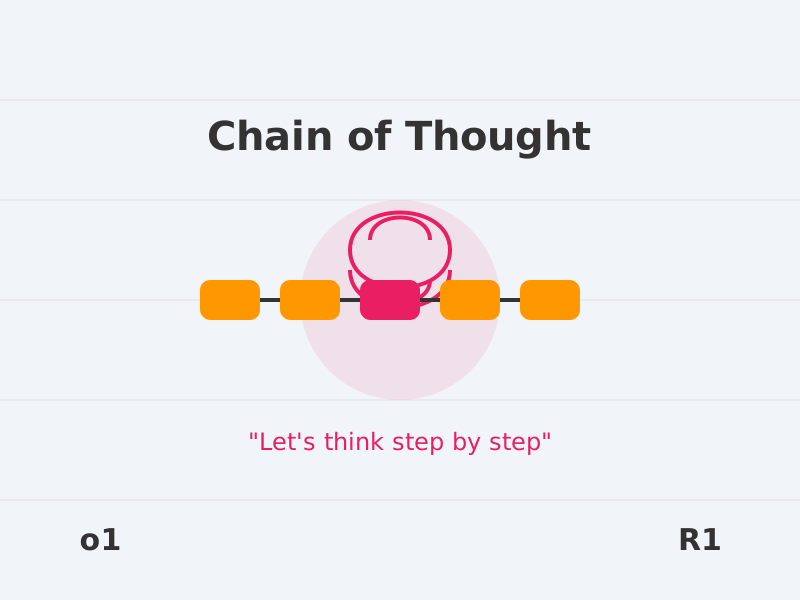
The arrival of OpenAI o1 and DeepSeek R1 marks the end of complex 'Prompt Engineering'. Understand how reasoning models (System 2) work and when to use them.
Autocomplete is a thing of the past. Discover how AI Agents like Cline and Cursor are redefining software development, allowing for multi-file editing and autonomous command execution.

A developer's take on DeepSeek R1 for coding tasks. From impressive reasoning to common hallucinations. Is it ready for production code?

The evolution of reasoning in AI. How OpenAI's o1 and DeepSeek's R1 compare. Chain-of-Thought prompting and the future of coding agents.