
OpenSEO: Open Source Semrush Alternative for AI Agents
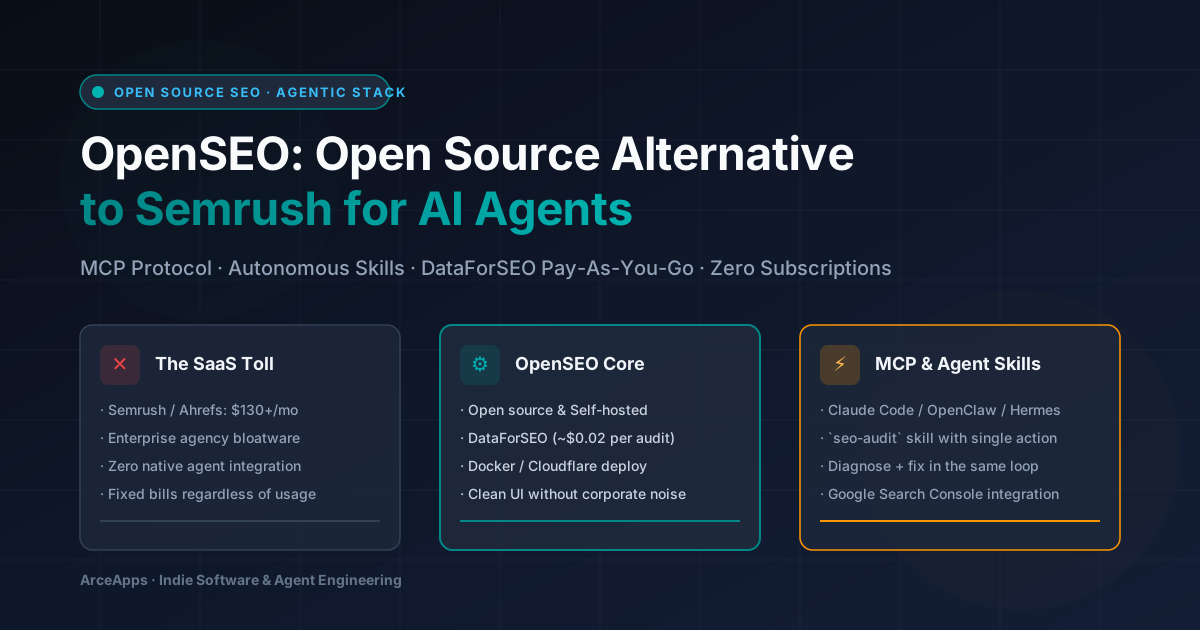
Table of Contents
🎣 The $140/Month Bill for Opening a Dashboard Twice a Year
Earlier this year, I received another automated renewal invoice from a well-known SEO and marketing intelligence suite. It was nearly $140 per month. I paused and did a quick, painful calculation: over the last ninety days, I had opened that web application exactly three times. Once to troubleshoot why a specific technical tutorial was indexing poorly on Google, once to check which search queries were bringing traffic to one of my side projects, and a third time out of pure guilt for paying a monthly subscription that rivaled the hosting cost of my entire production server fleet.
The fixed monthly subscription model of traditional SEO suites (Semrush, Ahrefs, Moz) makes complete commercial sense if you run a digital marketing agency with forty retainer clients, twenty account managers generating branded PDF decks, and continuous daily crawl demands. But if you are an independent software developer, an indie hacker, or a lean technical team building products on nights and weekends, that model is an unreasonable financial drain. You end up paying an inflated enterprise tax to interact with 4% of a cluttered dashboard, while the core tasks you genuinely care about —finding broken links, tuning metadata, structuring canonical URLs, and identifying low-competition keyword opportunities— remain buried under dozens of agency-oriented widgets.
A few days ago, midudev shared a sharp, timely observation across social channels that resonated with thousands of engineers: “If you care about your website’s SEO, this is for you”. He pointed directly to a project gaining massive momentum across GitHub: OpenSEO (every-app/open-seo).
OpenSEO is not merely another open-source UI clone of Semrush built with modern React components. It represents a fundamental paradigm shift on two parallel fronts:
- On-Demand Pay-As-You-Go Economics (Bring Your Own Key - BYOK): Instead of billing $130+ every single month upfront, OpenSEO connects directly to the raw DataForSEO API and Google Search Console. You pay exclusively for the data you query: running a complete technical site audit costs roughly two cents. If you do not perform audits in a given month, your total expenditure is exactly zero dollars.
- Native AI Agent Integration (Model Context Protocol & Reusable Skills): It exposes an official Model Context Protocol (MCP) server alongside a library of pre-packaged agent skills. This enables autonomous coding agents such as Claude Code, OpenClaw, Hermes, and Antigravity to inspect your codebase, analyze real SERP and crawl data, diagnose technical errors across Markdown or Astro files, and write the corrective patches directly into your Git repository within a single terminal session.
Context and Recommended Prior Reading: This article builds upon key agentic architectural patterns we have thoroughly analyzed on ArceApps. To understand how coding agents interface with external data sources through open protocols, explore our guide on MCP Servers and Cross-Agent Memory. To see how structured skill documents control agent behavior, check AI Agent Skills and Dynamic Context and our deep dive into Addy Osmani’s 24 Full-Lifecycle Agent Skills. If you are running autonomous goal loops, make sure to read AI Agent Goal Loops: Iterating Until Green.
🛠️ The Traditional SaaS Toll: Why the Agency Model Fails Independent Developers
To appreciate why OpenSEO is capturing so much attention, we must first examine the economic and technical limitations of the legacy SEO platforms that have dominated the industry over the past decade.
┌──────────────────────────────────────────────────────────────────┐
│                    THE TRADITIONAL SAAS TOLL                     │
├────────────────────────────────┬─────────────────────────────────┤
│ SEMRUSH PRO / AHREFS LITE      │ INDIE DEVELOPER / CRAFTSPERSON  │
├────────────────────────────────┼─────────────────────────────────┤
│ • $129 – $139 / month minimum  │ • Sporadic use (1-2 times/month)│
│ • $1,600+ fixed annual bill    │ • Lean, self-funded budget      │
│ • Agency bloatware for 50 users│ • Only needs raw technical data │
│ • Proprietary data walled-garden│ • Zero IDE / terminal integration│
│ • No native MCP server support │ • Manual copy-pasting of reports│
└────────────────────────────────┴─────────────────────────────────┘
The incumbent platforms were conceived in the pre-AI web era. Their business model was straightforward: crawl the global web continuously, store petabytes of backlink and SERP graphs in proprietary databases, build extensive graphical user interfaces with hundreds of nested charts, and charge high monthly recurring subscriptions calculated for corporate marketing budgets.
For an independent engineer building web software, this architecture introduces four severe bottlenecks:
1. The Idle Capacity Tax
In technical product development, SEO work happens in bursts. During a major launch, domain migration, or design overhaul, you might run twenty crawls a day. Once the architectural foundation is solid, the project enters a stable maintenance phase for months where all you need is periodic rank tracking and anomaly alerts. Under standard SaaS pricing, you pay the exact same $140 fee during your idle months as you do during your peak build cycles. Over twelve months, you end up paying $1,600+ for infrastructure that sat untouched 90% of the time.
2. Pervasive Feature Bloat
Enterprise SEO suites justify their pricing by continually expanding into adjacent marketing workflows: social media schedulers, influencer campaign trackers, display advertising analytics, and automated agency client PDF generators with custom branding. For an engineer who simply wants to verify that hreflang tags match, canonicals resolve cleanly, and no 404 response codes exist in the static output, this administrative clutter creates constant friction and sluggish navigation.
3. The Chasm Between Diagnostics and Code
The most glaring architectural flaw of legacy tools is their complete detachment from the actual development environment. A SaaS crawler flags that you have 18 pages with duplicate titles, 5 broken redirects, and 30 images missing alt text. What comes next?
- Export a CSV file from the web dashboard.
- Open your code editor or terminal.
- Manually search for the matching files across your workspace (
src/pages,src/content, Astro components). - Apply each code fix by hand.
- Commit and trigger your deployment pipeline.
- Return to the SaaS platform and spend additional crawl credits to confirm the fix.
This manual feedback loop is tedious, slow, and completely misaligned with modern software engineering practices.
4. Zero Agentic Machine Interfaces (No-Agent by Design)
None of the legacy tools provide an open Model Context Protocol server structured for LLMs to query clean JSON tools, retrieve actionable site diagnostics, and write fixes. Their REST APIs are locked behind $500+/month enterprise tiers, designed for big-data warehousing rather than autonomous, local agent-driven terminal workflows.
🧬 OpenSEO Architecture: The Modular, Decoupled Stack
OpenSEO dismantles this monolithic model by separating user interfaces, agentic protocols, and data provisioning into clean, swappable layers.
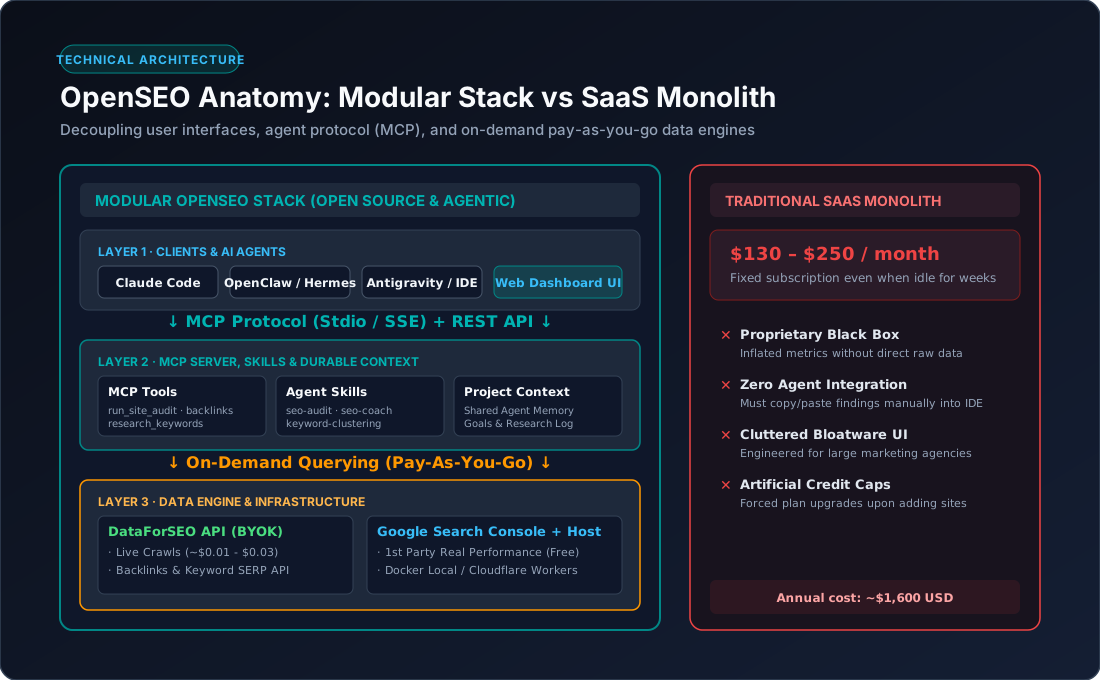
Let us dissect the three fundamental layers of the OpenSEO technical stack:
Layer 1: Client Interfaces & Autonomous Coding Agents
At the top of the stack sit the consumers of SEO data. In OpenSEO, the web browser is not the sole access point, but simply one interface among many:
- Terminal & Coding Agents: Command-line agents like Claude Code, OpenClaw, Hermes, or Antigravity connect directly over the Model Context Protocol.
- Modern Web Dashboard: A lightweight Next.js / React application focused purely on essential workflows: keyword research, technical site audits, backlink overviews, and AI visibility tracking.
- IDEs and Editors: Any environment that supports MCP can discover and execute OpenSEO tools as native workspace capabilities.
Layer 2: MCP Server, Reusable Agent Skills & Durable Project Context
This middle layer translates raw data into structured, cognitive workflows for AI agents:
- Granular MCP Tools: Atomic primitives including
whoami,list_projects,create_project,run_site_audit,get_audit_issues,get_backlinks_overview,research_keywords,get_domain_overview, andget_search_console_performance. - Reusable Agent Skills: Formal workflow definitions in markdown (
SKILL.md) that guide the agent through structured reasoning, enforce cost ceilings, and prioritize high-leverage actions. - Durable Project Context (
project_context): A shared, cross-session memory store (get_project_context,update_project_context) containing the business overview, target audience, core pages, key competitors, and an appended research log (research_log). If a competitor audit was completed two weeks ago, the agent reads the stored log instead of re-spending API credits.
Layer 3: On-Demand Data Engines & Self-Hosting Infrastructure
At the foundation lies the decoupled data engine:
- DataForSEO API (Bring Your Own Key): DataForSEO acts as the wholesale infrastructure provider behind many commercial SEO platforms. OpenSEO connects directly to their REST endpoints for real-time SERP parsing, backlink index queries, search volume metrics, and on-page crawls. You pay DataForSEO directly based on strict per-call usage.
- Google Search Console Integration: Native integration with Google’s Search Console API (or manual CSV imports) provides first-party, authoritative data (actual impressions, clicks, CTR, and average position) at zero marginal cost.
- Zero-DevOps Deployment: OpenSEO can run locally inside Docker containers or deploy globally onto Cloudflare’s serverless edge (Cloudflare Pages/Workers, D1 SQLite, and KV storage), eliminating dedicated server maintenance costs.
🤖 The Agentic Loop: From Passive Audits to Direct Code Repairs
The fundamental breakthrough of OpenSEO is transforming SEO from an observational exercise into an automated software engineering loop.
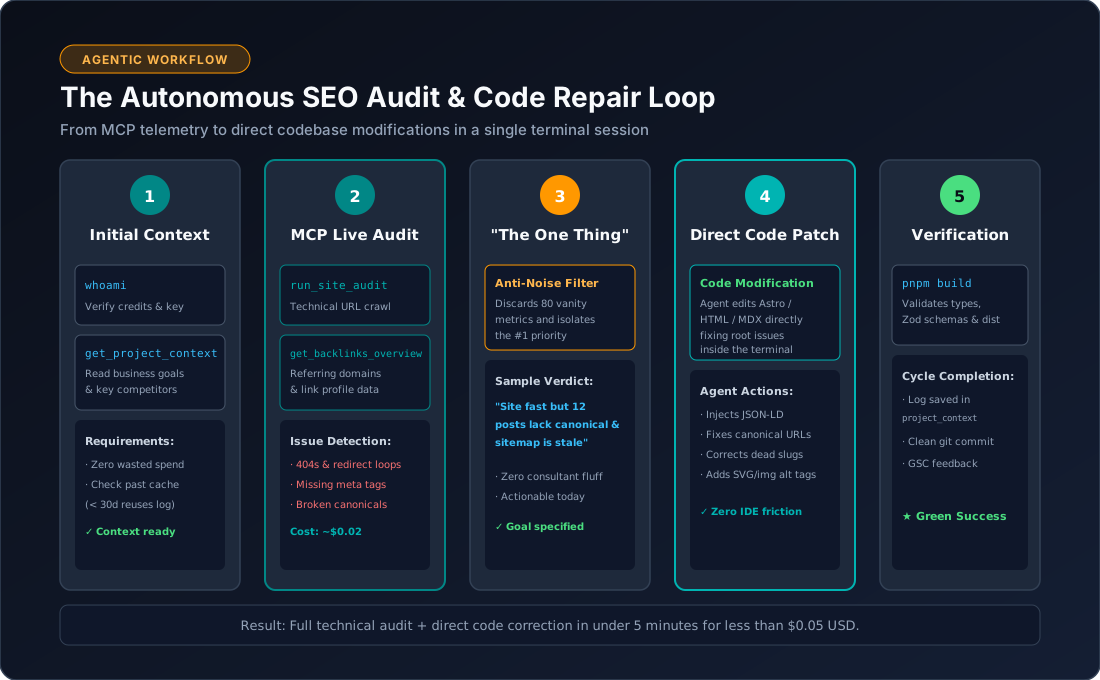
Here is the exact step-by-step lifecycle when an AI agent executes an SEO task with OpenSEO:
Step 1: Initialization & Budget Verification
When invoked, the agent does not fire expensive API requests blindly. It first executes whoami to verify MCP connectivity and inspect remaining DataForSEO credits.
Next, it calls get_project_context. If the project already has an established business summary and a technical audit log under 30 days old, the agent leverages the existing data. If the context is blank, it runs an inline, single-question interview to capture core site intent before proceeding.
Step 2: Live Technical Crawl & Metric Retrieval
The agent triggers run_site_audit against the target domain. By default, heavy Lighthouse performance audits are disabled to keep crawls fast and lightweight (Lighthouse can be toggled on with runLighthouse: true only when Core Web Vitals profiling is explicitly requested).
While the crawler processes pages in the background, the agent calls get_backlinks_overview to understand referring domain distribution and authority health.
Step 3: Isolating “The One Thing” (High-ROI Prioritization)
Most automated audits bombard the developer with 100+ unranked warnings, inducing analysis paralysis.
The OpenSEO seo-audit skill enforces a strict rule: the entire audit report exists to support ONE concrete, high-leverage action the site owner must execute this week.
- If the technical structure is clean but the site has zero referring domains, the action is targeted outreach with ready-to-send copy.
- If high-value pages have accidental
noindexheaders or broken canonical tags, the action is removing the block immediately. - If a legacy domain migration missed 301 rules, the action is configuring the permanent redirect on the host.
The agent cuts through vanity metrics to isolate the highest-impact engineering task.
Step 4: Direct Codebase Patching
Because the coding agent operates directly within your repository workspace, it does not stop at diagnosis: it opens the source code and applies the fixes immediately.
For instance:
- If blog posts lack Open Graph tags or descriptive meta titles, the agent updates the frontmatter of Markdown/MDX files in
src/content/blog/. - If internal links point to renamed routes, the agent performs a clean refactor across affected Astro components.
- If structured data is missing, it injects Schema.org JSON-LD scripts into the global layout.
- If
robots.txtorsitemap.xmlhas conflicting rules, it updates the static generation logic.
Step 5: Verification & Log Closure
Following code modifications, the agent runs the repository verification command (such as pnpm build or typecheck suites) to ensure that all TypeScript types, Zod schema validations, and static paths compile cleanly with zero errors.
Finally, it records the durable findings via update_project_context by appending a concise entry to the research_log. The entire cycle concludes with a clean, descriptive Git commit, executed in under five minutes for a fraction of a cent.
🎯 The OpenSEO Agent Skills Catalog: A Deep Dive
OpenSEO provides a comprehensive suite of specialized agent skills (.agents/skills/). Each skill is defined as an actionable markdown specification detailing the operational scope, tool constraints, and output structures.
┌──────────────────────────────────────────────────────────────────┐
│                   OPENSEO AGENT SKILLS CATALOG                   │
├──────────────────────┬───────────────────────────────────────────┤
│ SKILL                │ TECHNICAL SCOPE & PURPOSE                 │
├──────────────────────┼───────────────────────────────────────────┤
│ seo-audit            │ 1-page report centered on a single action │
│ seo-coach            │ Friendly, adaptive strategic mentor       │
│ seo-project-setup    │ Context initialization & GSC integration  │
│ keyword-research     │ Search opportunity evaluation by intent   │
│ keyword-clustering   │ Semantic clustering mapped to site routes │
│ competitor-analysis  │ Deep dive on a single competitor's gaps   │
│ competitive-landscape│ Market-wide content and backlink mapping  │
│ link-prospecting     │ High-probability prospect discovery       │
│ local-seo            │ Google Business Profile & Maps visibility │
│ deslop               │ Rigorous pruning of generic AI filler     │
└──────────────────────┴───────────────────────────────────────────┘
Let us examine the most essential skills in detail:
1. seo-audit: The Antidote to Cluttered SEO Reports
Unlike generic audit tools that output 40-page PDF documents full of arbitrary 0-100 scores, seo-audit produces a concise, single-page HTML report designed for immediate execution.
It strictly forbids alarmist jargon, requires all technical terms (canonical, meta description, 301, structured data) to be explained in plain language on first mention, and mandates that every reported issue be verified directly against live HTML responses before inclusion.
2. seo-coach: Adaptive Strategic Mentorship
The seo-coach skill acts as an interactive technical partner. It assesses the user’s expertise level, reviews the shared project_context, and suggests 2 to 4 clear next steps rather than overwhelming the developer with an exhaustive menu.
It cleanly separates data sources:
- Search Console Data: Authoritative, first-party clicks, impressions, and exact average rankings (free).
- OpenSEO MCP Data: Third-party keyword difficulty scores, estimated volumes, and competitor link profiles.
- Browser Scraping & DOM Inspection: Live page headers, markup, and accessibility trees.
- Engineering Judgment: Pragmatic decisions that align SEO efforts with actual product value.
3. keyword-clustering: Structuring Information Architecture
A common pitfall in organic growth is creating duplicate, near-identical articles for every long-tail keyword variation, causing keyword cannibalization.
The keyword-clustering skill takes query lists from Google Search Console or DataForSEO, clusters them by shared search intent, and maps each cluster directly to an existing or proposed URL route in your codebase.
4. deslop: Eliminating AI Prose Artifacts
OpenSEO includes a specialized deslop skill focused on removing common AI writing patterns. When generating documentation, landing pages, or blog copy, it strips out inflated buzzwords (“revolutionary”, “game-changing”, “in today’s fast-paced digital world”), passive constructions, and repetitive sentence templates, ensuring the output sounds like an authentic human craftsperson.
💰 Real-World Indie Economics: SaaS Subscriptions vs OpenSEO
Let us examine unit economics with exact figures, because financial sustainability is central to the indie ethos.
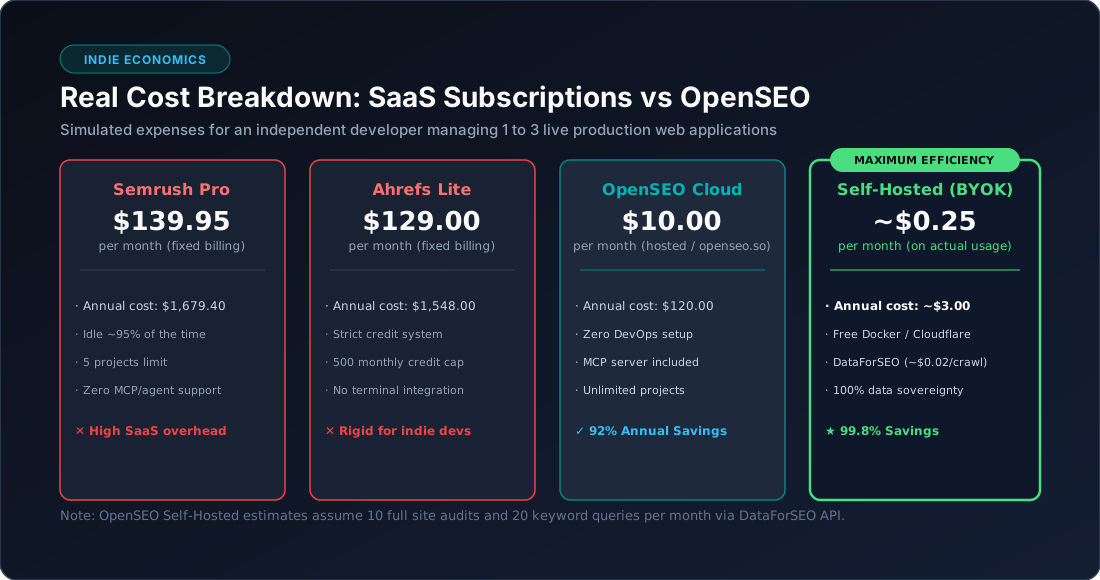
Here is a side-by-side comparison for an independent developer managing 1 to 3 production web applications:
| Metric | Semrush Pro | Ahrefs Lite | OpenSEO Cloud (Hosted) | OpenSEO Self-Hosted (BYOK) |
|---|---|---|---|---|
| Fixed Monthly Fee | $139.95 / month | $129.00 / month | $10.00 / month | $0.00 / month |
| Fixed Annual Bill | $1,679.40 | $1,548.00 | $120.00 | $0.00 |
| Technical Crawl Cost | Included in plan | Consumes monthly credits | Included in plan | ~$0.01 – $0.03 (DataForSEO) |
| Keyword Research Cost | Included in plan | Consumes monthly credits | Included in plan | ~$0.005 (DataForSEO) |
| Backlink Overview Cost | Included in plan | Consumes monthly credits | Included in plan | ~$0.02 (DataForSEO) |
| MCP Server for AI Agents | Not available | Not available | Included | Included (Open Source) |
| Project Limits | 5 projects | 5 projects | Unlimited | Unlimited |
| Estimated Annual Spend (Indie) | $1,679.40 | $1,548.00 | $120.00 | ~$2.50 – $5.00 |
| Cost Savings vs SaaS | Baseline (0%) | -7.8% | -92.8% | -99.8% |
The Math of Usage-Based Consumption
Consider an active development month for an indie hacker:
- 10 complete technical site crawls (10 × $0.02 = $0.20)
- 30 keyword volume and SERP queries (30 × $0.005 = $0.15)
- 5 competitor backlink analyses (5 × $0.02 = $0.10)
- Unlimited Google Search Console queries ($0.00)
Total cost for that active month: $0.45 USD.
If your application remains in stable maintenance for the subsequent three months, your combined cost across that quarter will be approximately $0.06 USD.
Compared to the $560 USD you would have paid to a legacy SaaS suite over that same four-month window, the savings exceed 99%. That reclaimed capital can directly fund compute infrastructure, domain registrations, LLM tokens, or pure project profitability.
🚀 Setup and Deployment Guide
Deploying OpenSEO is straightforward. You can choose between two self-hosting setups depending on your workflow:
Option A: Local Docker Deployment (Ideal for development & testing)
If you prefer running audits on demand on your local workstation without public internet exposure:
- Clone the repository:
git clone https://github.com/every-app/open-seo.git
cd open-seo- Configure environment variables: Create your local environment file:
cp .env.example .envPopulate .env with your API credentials:
DATAFORSEO_LOGIN=your_dataforseo_login
DATAFORSEO_PASSWORD=your_dataforseo_password
NEXTAUTH_SECRET=your_secure_random_string
NEXTAUTH_URL=http://localhost:3000- Start the containers:
docker compose up -dAccess the dashboard at http://localhost:3000.
Option B: Serverless Deployment on Cloudflare (Recommended for production)
For a permanent, globally available dashboard accessible across devices with HTTPS and zero server maintenance:
OpenSEO provides native support for Cloudflare Pages, Workers, D1 SQL databases, and KV storage.
- Install dependencies and authenticate with Cloudflare:
pnpm install
pnpm exec wrangler login- Set your production secrets:
pnpm exec wrangler secret put DATAFORSEO_LOGIN
pnpm exec wrangler secret put DATAFORSEO_PASSWORD
pnpm exec wrangler secret put NEXTAUTH_SECRET- Deploy to Cloudflare:
pnpm run deploy:cloudflareYour application will be live at https://your-project.pages.dev with zero hosting costs under Cloudflare’s generous free tier.
Connecting the OpenSEO MCP Server to AI Coding Agents
To enable Claude Code, OpenClaw, Hermes, or Antigravity CLI to execute OpenSEO tools, add the server definition to your agent configuration.
Claude Code Configuration (~/.claude.json or .claude/settings.json):
{
  "mcpServers": {
    "openseo": {
      "command": "npx",
      "args": ["-y", "@openseo/mcp-server"],
      "env": {
        "OPENSEO_API_URL": "http://localhost:3000",
        "DATAFORSEO_LOGIN": "your_dataforseo_login",
        "DATAFORSEO_PASSWORD": "your_dataforseo_password"
      }
    }
  }
}
Installing Skills in Your Workspace:
You can pull the official OpenSEO skills directly into your repository:
npx skills add every-app/open-seo --skill seo-audit
npx skills add every-app/open-seo --skill seo-coach
npx skills add every-app/open-seo --skill keyword-clustering
Once installed, prompt your agent naturally:
“Run a complete technical audit on this repository using the seo-audit skill, identify the top metadata or canonical issues across blog posts, and apply the fixes directly to the source files.”
🧪 Real-World Case Study: Auditing and Patching a Static Astro Site
Let us walk through a practical scenario demonstrating how an AI agent uses OpenSEO to audit and repair a modern Astro static publication.
┌──────────────────────────────────────────────────────────────────┐
│                  REAL-WORLD CASE STUDY FLOW                      │
├──────────────────────────────────────────────────────────────────┤
│ 1. MCP DIAGNOSTIC TELEMETRY:                                     │
│    • 12 articles missing absolute canonical URL tags             │
│    • 4 SVG hero images missing descriptive alt text              │
│    • Complete absence of Schema.org JSON-LD (TechArticle)        │
│    • 2 internal links pointing to renamed slugs (404s)           │
├──────────────────────────────────────────────────────────────────┤
│ 2. DIRECT CODEBASE PATCH:                                        │
│    • Layout.astro: Injected absolute <link rel="canonical">      │
│    • SeoHead.astro: Added dynamic TechArticle JSON-LD component  │
│    • src/content/blog/: Cleaned broken links across markdown     │
├──────────────────────────────────────────────────────────────────┤
│ 3. VERIFICATION & BUILD PASS:                                    │
│    • pnpm build -> 950 static pages generated cleanly            │
│    • Zod schema validation: PASS with 0 warnings                 │
└──────────────────────────────────────────────────────────────────┘
1. Agent Diagnostic Telemetry via MCP
When the agent executes the audit, it parses issues returned by get_audit_issues. Rather than dumping a generic list, it correlates findings with the codebase structure:
- Relative Canonical URLs: Several dynamic templates output relative canonical paths (
/blog/post) instead of fully-qualified absolute URLs (https://domain.com/blog/post), creating indexation warnings. - Missing Structured Data: Content posts lack
TechArticleJSON-LD schemas containingdatePublished,dateModified, and author metadata. - Broken Internal References: Following a route rename, two older articles reference stale URLs resulting in 404 responses.
- SVG Image Accessibility: Several inline graphics in
public/images/lack descriptivealttext.
2. Autonomous Code Implementation
The agent proceeds to modify the codebase directly, following clean architecture principles.
Structured Data Component (src/components/SeoHead.astro):
---
export interface Props {
  title: string;
  description: string;
  pubDate: Date;
  lastmod?: Date;
  canonicalUrl: string;
  heroImage?: string;
  author?: string;
}

const {
  title,
  description,
  pubDate,
  lastmod,
  canonicalUrl,
  heroImage,
  author = 'ArceApps'
} = Astro.props;

// Construct Schema.org JSON-LD structured object
const schemaArticle = {
  '@context': 'https://schema.org',
  '@type': 'TechArticle',
  'headline': title,
  'description': description,
  'datePublished': pubDate.toISOString(),
  'dateModified': (lastmod || pubDate).toISOString(),
  'author': {
    '@type': 'Person',
    'name': author,
    'url': 'https://arceapps.com'
  },
  'mainEntityOfPage': {
    '@type': 'WebPage',
    '@id': canonicalUrl
  },
  ...(heroImage && {
    'image': new URL(heroImage, Astro.site).toString()
  })
};
---

<!-- Primary SEO Meta Tags -->
<title>{title}</title>
<meta name="description" content={description} />
<link rel="canonical" href={canonicalUrl} />

<!-- Open Graph / Social Sharing -->
<meta property="og:type" content="article" />
<meta property="og:title" content={title} />
<meta property="og:description" content={description} />
<meta property="og:url" content={canonicalUrl} />
{heroImage && <meta property="og:image" content={new URL(heroImage, Astro.site).toString()} />}

<!-- Structured Data JSON-LD -->
<script type="application/ld+json" set:html={JSON.stringify(schemaArticle)} />
Fixing Broken References Across Content:
The agent searches src/content/blog/ for references to outdated URLs and replaces them with valid canonical slugs, restoring internal link graph integrity.
3. Build Verification
The agent runs:
pnpm buildAstro compiles all pages, validating frontmatter Zod schemas, image references, and static output. With the build exiting cleanly (code 0), the agent writes the audit summary to the OpenSEO research_log and prepares a focused Git commit.
⚖️ Critical Trade-offs: When to Use OpenSEO vs Legacy SaaS
Honest engineering requires understanding where a tool excels and where alternative solutions remain superior.
┌──────────────────────────────────────────────────────────────────┐
│                   TECHNICAL DECISION MATRIX                      │
├────────────────────────────────┬─────────────────────────────────┤
│ WHERE OPENSEO WINS             │ WHERE LEGACY SAAS LEADS         │
├────────────────────────────────┼─────────────────────────────────┤
│ • Indie developers & hackers   │ • Agencies managing 100+ clients│
│ • Agent-driven development     │ • 10+ year historical backlinks │
│ • Pay-as-you-go cost structure │ • Panel-based clickstream data  │
│ • In-IDE audit & code patching │ • Multi-tenant client PDF decks │
│ • Complete data sovereignty    │ • Enterprise PPC campaign suites│
└────────────────────────────────┴─────────────────────────────────┘
Core Strengths of OpenSEO
- Radical Cost Efficiency: Eliminates recurring fixed overhead. You pay minimal pennies only when executing actual queries.
- Data Sovereignty & Privacy: Self-hosted infrastructure ensures your internal notes, competitor lists, and Search Console metrics remain under your control.
- Frictionless Agent Integration: Built from inception for MCP and coding agents.
- Code Extensibility: You can fork the repository, add custom crawl assertions tailored to your tech stack, and integrate it into your continuous delivery pipelines.
When Legacy SaaS Still Adds Value
- Extensive Historical Backlink Databases: Ahrefs and Semrush have been indexing web graphs continuously for well over a decade. For forensic analysis of legacy domains penalized years ago, their historical archives offer deeper coverage.
- Clickstream-Estimated Traffic Panels: Enterprise suites license aggregated third-party browser clickstream data to model competitor traffic without Search Console access. DataForSEO provides SERP-based algorithmic estimates, which are highly effective for relative benchmarking but may differ on niche sites.
- Non-Technical Agency Client Reporting: If you manage a traditional marketing agency with junior consultants delivering monthly presentation decks to non-technical stakeholders, Semrush provides turnkey graphical reporting without needing Docker or API key management.
💡 Key Takeaways for Indie Developers
The rise of OpenSEO reflects broader structural changes in software development:
- The Commoditization of Data: High-quality SEO data is no longer locked inside closed platforms; the underlying APIs (like DataForSEO) are accessible to all. OpenSEO removes the artificial markup layer.
- MCP as the Standard Machine Interface: Software value is shifting from graphical user interfaces toward clean, protocol-compliant machine interfaces that allow autonomous agents to operate effectively.
- The Decline of Passive Consulting Software: Tools that merely list problems without providing programmatic paths to fix them are increasingly obsolete. Modern tools must participate directly in the implementation loop.
- The Power of Lean Engineering: Keeping operational fixed costs near zero allows independent creators to remain profitable, flexible, and focused on building great software.
📚 References and Bibliography
Primary Sources and Repositories
- OpenSEO Repository (GitHub): every-app/open-seo — Official open-source codebase, architecture documentation, and agent skills.
- OpenSEO Cloud Platform: openseo.so — Managed hosted service and setup documentation.
- DataForSEO API Reference: dataforseo.com/apis — Official documentation for SERP, On-Page, and Backlink endpoints.
- Model Context Protocol (MCP) Specification: modelcontextprotocol.io — Open standard for connecting LLMs with external tools and data.
- Original Post by midudev: LinkedIn Post on OpenSEO (Miguel Ángel Durán).
Related Articles on ArceApps
- MCP Servers and Cross-Agent Memory: The Complete Guide
- AI Agent Skills and Dynamic Context in Software Engineering
- Addy Osmani’s Agent Skills: 24 Skills for the Full Lifecycle
- The AGENTS.md Standard: Living Context for Coding Agents
- AI Agent Goal Loops: Iterating Until Green
- Clean Architecture for AI-Assisted Systems
- Real Token Savings Strategies for AI Agents
Are you using MCP servers or autonomous agents to manage technical SEO on your projects? Share your experiences and workflows in the comments or on our social channels.
You might also be interested in
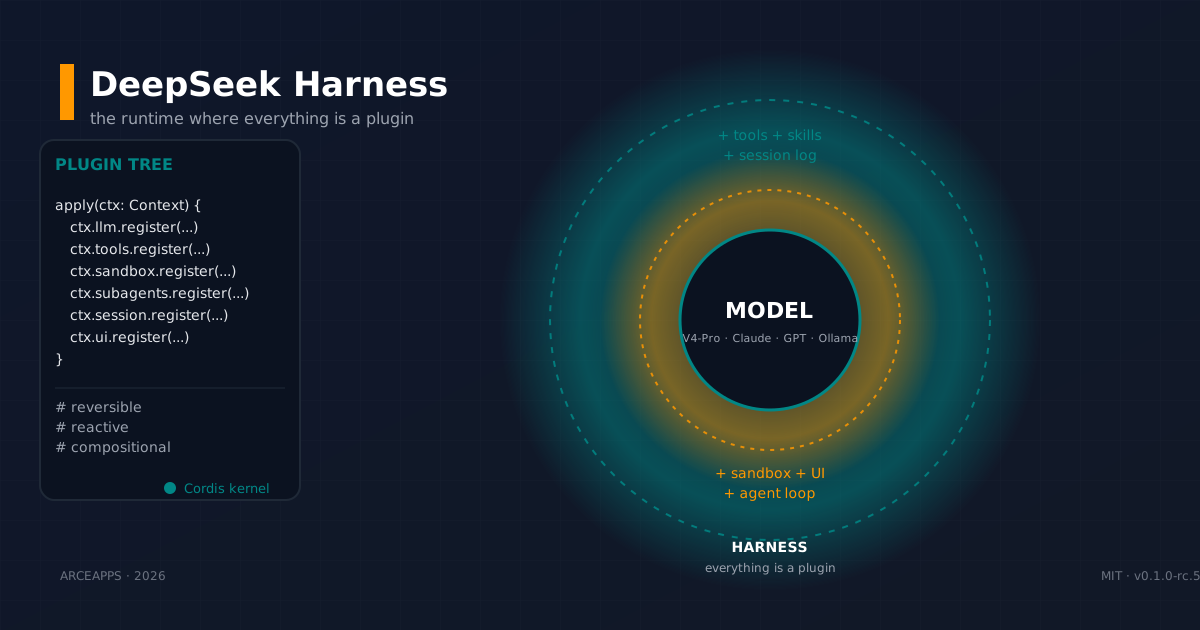
DeepSeek Harness: the runtime where everything is a plugin
DeepSeek Harness (dsh) is an MIT open-source runtime where model, tools, session, sandbox and even the loop are plugins. Deep-dive into Cordis, runtime modes, append-only session log and self-evolution.
Open Source AI IDEs: The Great Community Semifinal
We analyze the top 10 open-source and community AI coding assistants and IDEs. Discover why OpenCode and Hermes lead this tournament semifinal.
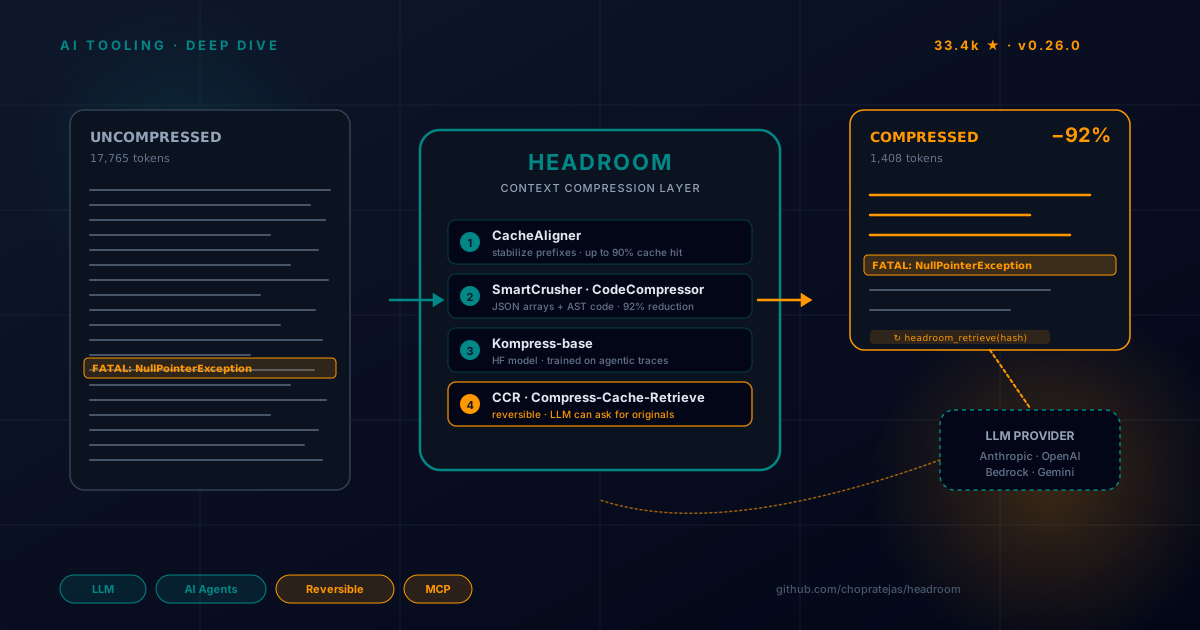
Headroom: the context compression layer yo...
Deep dive into Headroom, the open-source project (33.4k ⭐) that promises 60-95% token reduction on what you send to an LLM without losing accuracy. We test its 6 algorithms, its reversible CCR, and its proxy mode, and compare it to the rest of the ecosystem.