
Conventional Commits: The Communication Standard

Table of Contents
📝 The Importance of Commit Messages
A commit message is a note to your future self and your team. “Fixed bug” is useless. “Fix null pointer in LoginActivity” is better.
Conventional Commits standardizes this format, making messages readable by both humans and machines.
Format
<type>(<scope>): <description>
- feat: A new feature (correlates with MINOR SemVer).
- fix: A bug fix (correlates with PATCH SemVer).
- docs: Documentation only changes.
- style: Changes that do not affect the meaning of the code (white-space, formatting).
- refactor: A code change that neither fixes a bug nor adds a feature.
- perf: A code change that improves performance.
- test: Adding missing tests or correcting existing tests.
- build: Changes that affect the build system or external dependencies (example scopes: gulp, broccoli, npm).
- ci: Changes to our CI configuration files and scripts (example scopes: Travis, Circle, BrowserStack, SauceLabs).
- chore: Other changes that don’t modify src or test files.
- revert: Reverts a previous commit.
🚀 Examples
Good
feat(auth): add google login button
fix(home): prevent crash on orientation change
docs(readme): update setup instructions
Bad
added login
fixed stuff
wip
🤖 Why Use It?
- Automation: Generate changelogs automatically.
- Versioning: Determine semantic version bumps (feat -> minor, fix -> patch).
- Searchability: Easily grep for all
fixcommits in a module.
🛠️ Tools
- Commitizen: CLI tool to help you write formatted messages.
- Husky: Git hooks to lint messages before commit.
- Conventional Changelog: Generate
CHANGELOG.mdfrom git history.
🏁 Conclusion
Adopting Conventional Commits is a small habit change with massive ROI. It turns your git log into a structured database of project history.
You might also be interested in
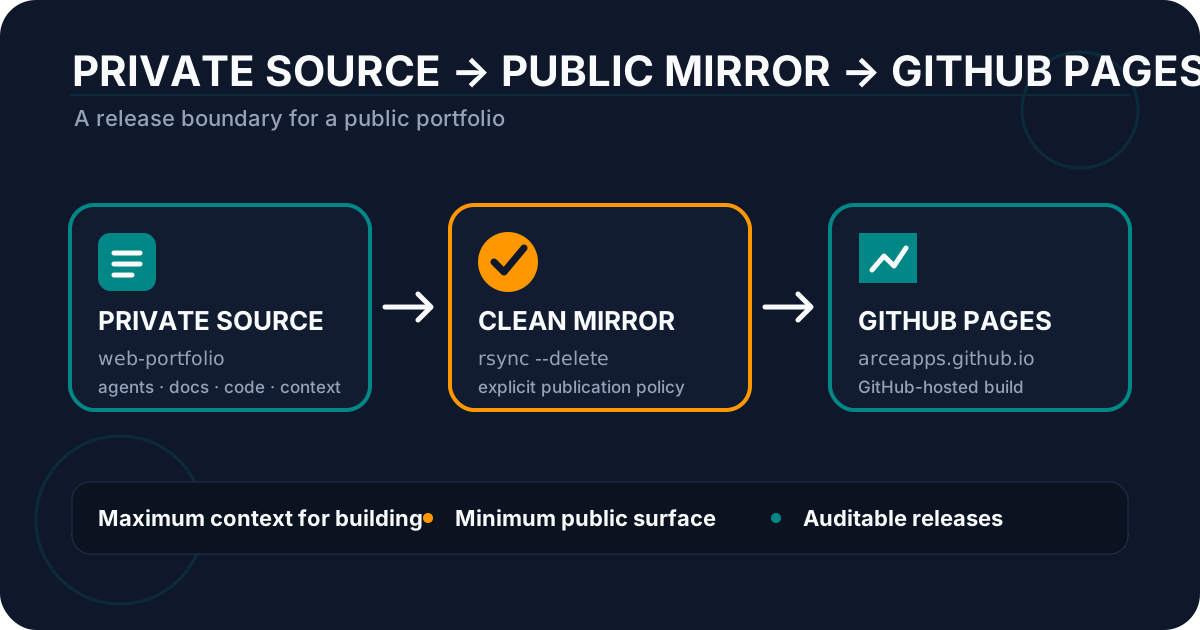
GitHub Pages: Private Portfolio, Public Mirror
Configure GitHub Pages with a private repository, a public mirror, and GitHub Actions to publish a portfolio without exposing internal files.
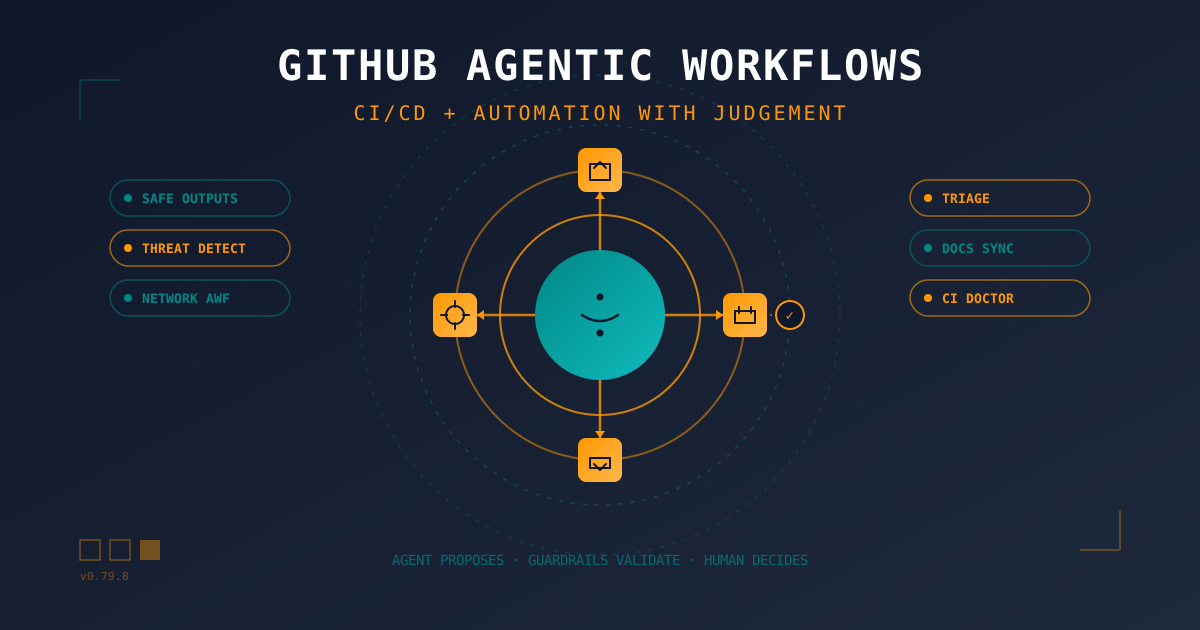
GitHub Agentic Workflows: Automation With ...
CI/CD already automates builds and deploys, but we still spend hours on triage, CI failures, and stale documentation. GitHub Agentic Workflows pushes automation one step further: agents operating inside defined guardrails to handle that repetitive work with judgement.

Claude 4.6 (Sonnet and Opus)
Review of Anthropic's Claude 4.6 family. How 'Adaptive Thinking' and 'Computer Use v2' change the game for mobile CI/CD. Includes comparison with Gemini 3.0 Pro.