
BLOG
AI
Explore technical articles and guides about ai.


NanoStack
Discover NanoStack, the open-source, zero-dependency framework that transforms any AI coding agent into a complete engineering team. Compatible with Claude Code, Gemini CLI, OpenAI Codex, Cursor, and more.
Read article
#AI Agents 
Lean Task-First Development: Beads, LeanSp...
A deep dive into three tools that solve context rot and keep AI coding agents focused: Beads (git-native DAG issue tracker), LeanSpec (minimal spec-driven workflow), and Taskmaster (PRD-to-task orchestration). Real commands, real workflows, real indie dev perspective.
Read article
#AI 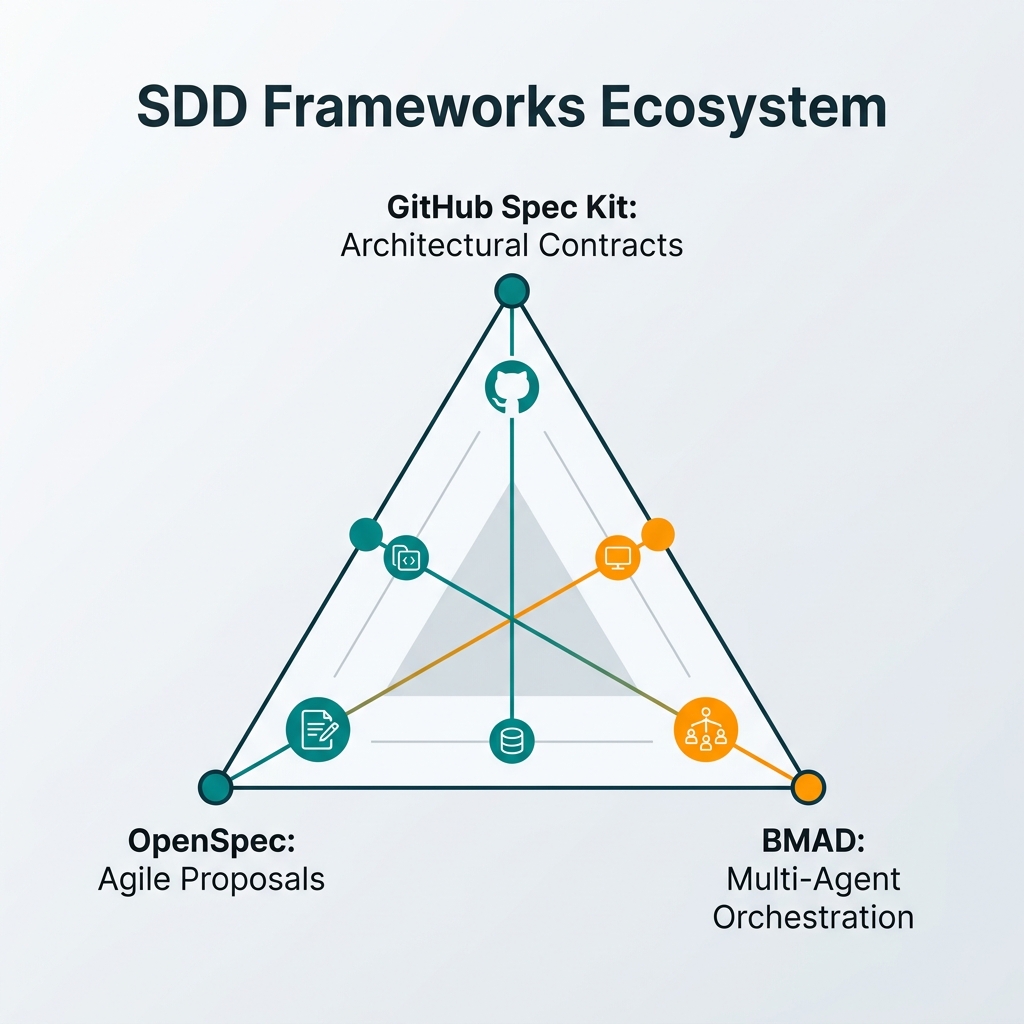
SDD Frameworks Deep Dive: GitHub Spec Kit,...
A thorough analysis of the three leading Spec-Driven Development frameworks: the architectural contracts of GitHub Spec Kit, the change-proposal agility of OpenSpec, and the multi-agent orchestration of BMAD-METHOD.
Read article
#SDD 

Hipocampus
A technical deep-dive into Hipocampus, a drop-in memory harness for AI agents that uses a 3-tier Hot/Warm/Cold architecture and a 5-level compaction tree. How ROOT.md enables constant-cost memory awareness and how it compares to hmem, Mem0, and Letta.
Read article
#AI 
hmem: Hierarchical SQLite Memory for AI Ag...
A technical deep-dive into hmem (Humanlike Memory), an MCP server that models human memory in five lazy-loaded levels backed by SQLite + FTS5. How Fibonacci decay, logarithmic aging, and a curator agent solve the context window problem across sessions and machines.
Read article
#AI 
The PARA Method and File-Based AI
A deep dive into using the PARA method (Projects, Areas, Resources, Archives) as a cognitive scaffold for AI agent memory. How Markdown files, Obsidian, and Logseq via MCP create transparent, human-editable memory systems that actually persist.
Read article
#AI 
PlugMem: Microsoft Research's Task-Agnosti...
A technical deep-dive into PlugMem, Microsoft Research's plugin memory system that transforms raw LLM agent interactions into reusable structured knowledge. How its three-component architecture (Structure, Retrieval, and Reasoning) outperforms task-specific memory designs.
Read article
#AI