
Effective Mentorship: A Guide for Seniors in the AI Era

Table of Contents
In 2020, mentoring a Junior Developer often meant explaining how RecyclerView adapters work or debugging a NullPointerException together.
In 2026, with tools like GitHub Copilot and Cursor, juniors can generate functional code in seconds. They don’t need you to be a syntax dictionary anymore. So, what is the role of a Senior Mentor today?
Shift from “How” to “Why”
The AI can answer “How do I implement a sorting algorithm?”. It struggles with “Why should we use this sorting algorithm over that one given our memory constraints?”.
As a mentor, your value has shifted up the abstraction stack. Instead of reviewing syntax, review intent.
The Socratic Method
When a mentee comes to you with a problem, don’t give the solution. Ask:
- “What have you tried so far?”
- “What does the AI suggest, and why do you think it might be wrong?”
- “What are the trade-offs of this approach?”
This teaches Critical Thinking, which is the one skill AI cannot replace.
Debugging the Thought Process
AI-generated code often “looks right” but fails in edge cases. Juniors might trust the output blindly. Your job is to teach them to be skeptical.
- Code Review Sessions: Don’t just comment on PRs. Sit down (or share screen) and walk through the logic. Ask, “What happens if this network call fails?” or “How does this handle orientation changes?”.
- Testing Mindset: Teach them to write tests before or with the AI code to verify behavior, not just implementation.
Psychological Safety
In an era of rapid change, juniors feel immense pressure to “know everything”. A good mentor creates a safe space where saying “I don’t understand this generated code” is celebrated, not punished.
Remind them: You are not your code. Bugs happen. The goal is learning.
Conclusion
Mentorship is no longer about transferring knowledge; it’s about transferring wisdom. It’s about teaching the patterns, the pitfalls, and the architectural principles that govern robust software.
You might also be interested in

From Junior to Senior: The Art of Prioritizing and Saying 'No'
Why technical skills are only half the battle. Learn how to manage impact, time, and expectations to reach the next level.
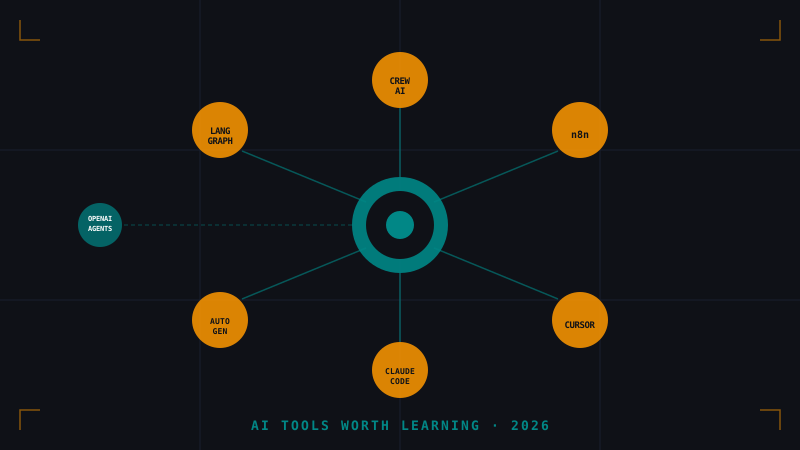
AI Tools Worth Learning in 2026: Investment vs. Hype
LangGraph, CrewAI, n8n, AutoGen, Cursor, Claude Code, OpenAI Agents SDK — a community debate emerged about which of these will still exist in a year. Here's an honest breakdown.
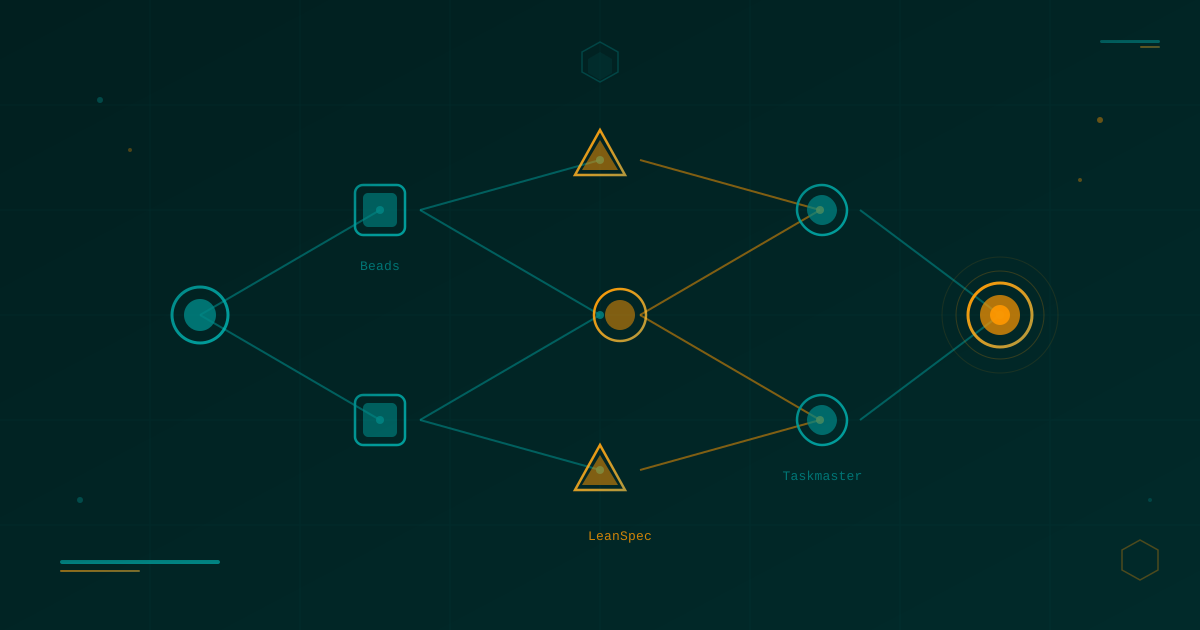
Lean Task-First Development: Beads, LeanSpec, and Taskmaster in Practice
A deep dive into three tools that solve context rot and keep AI coding agents focused: Beads (git-native DAG issue tracker), LeanSpec (minimal spec-driven workflow), and Taskmaster (PRD-to-task orchestration). Real commands, real workflows, real indie dev perspective.